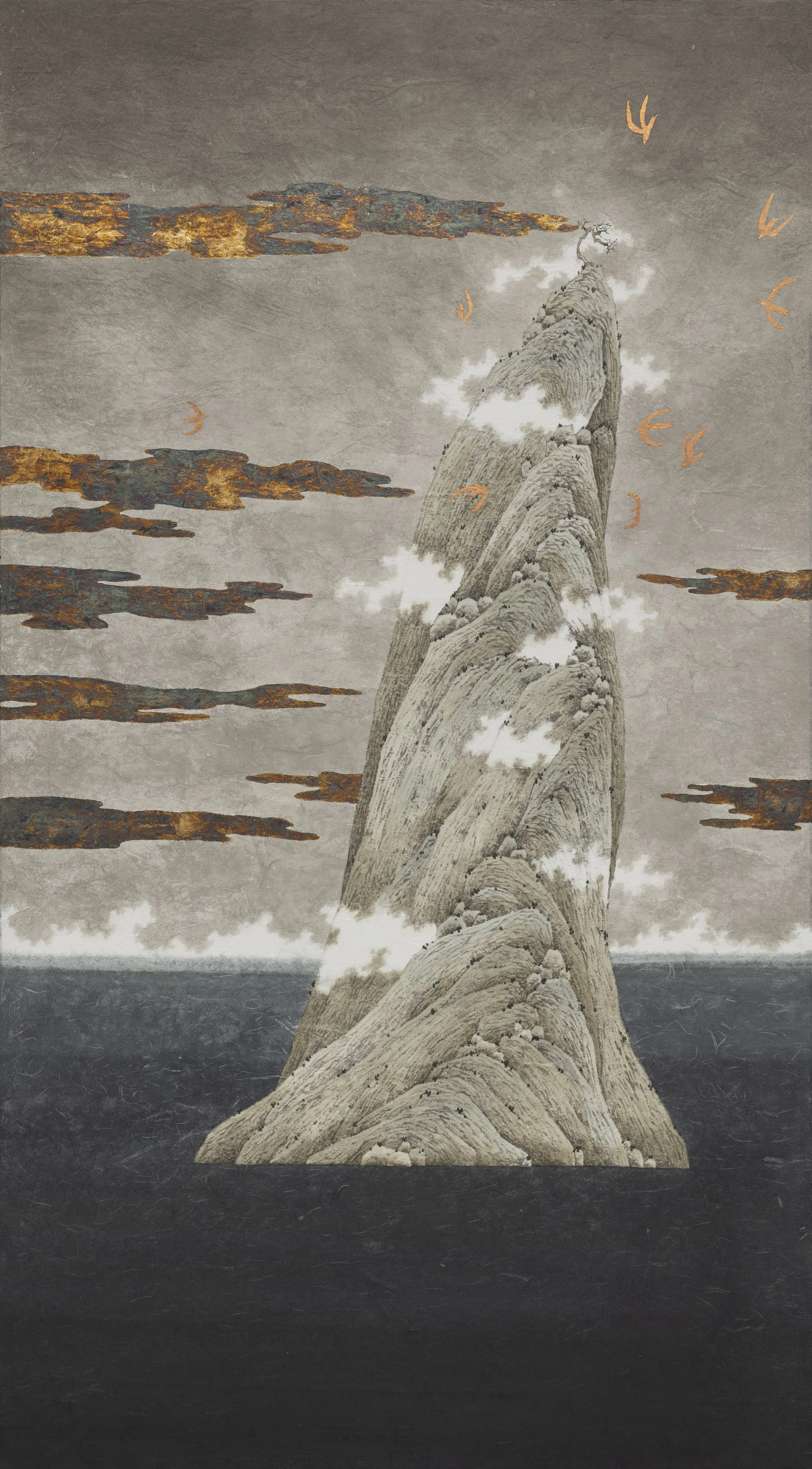
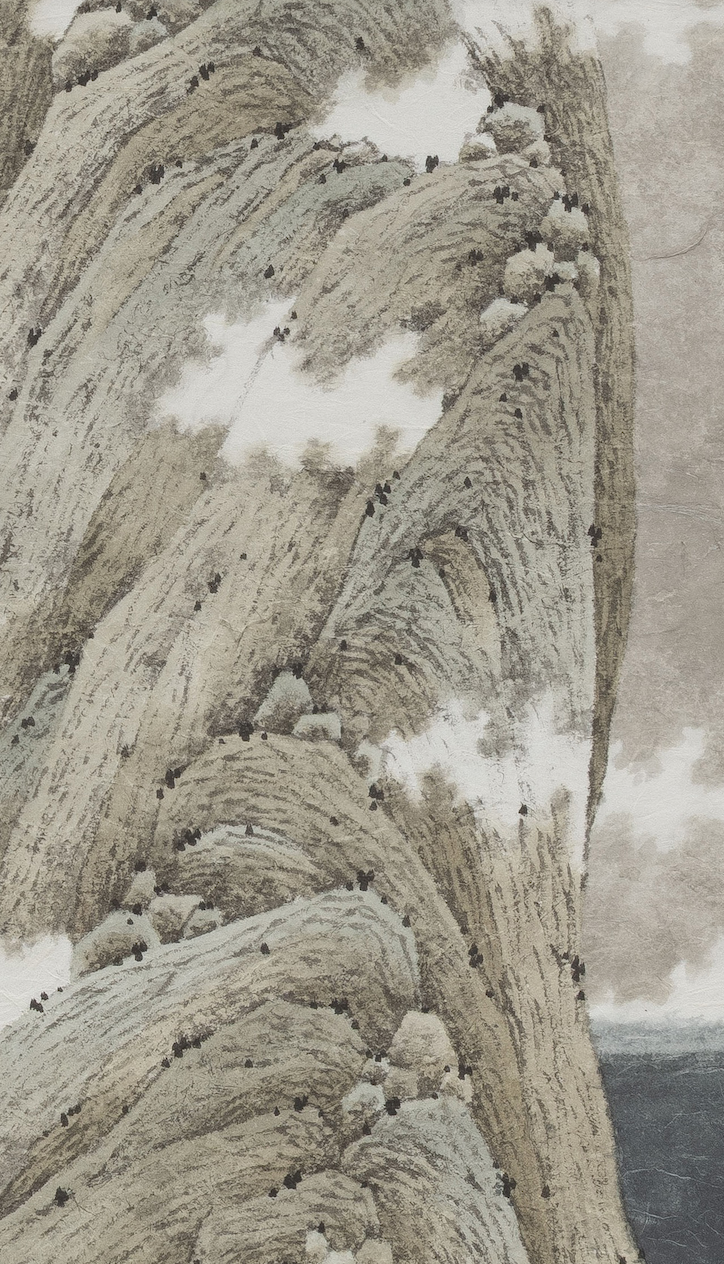
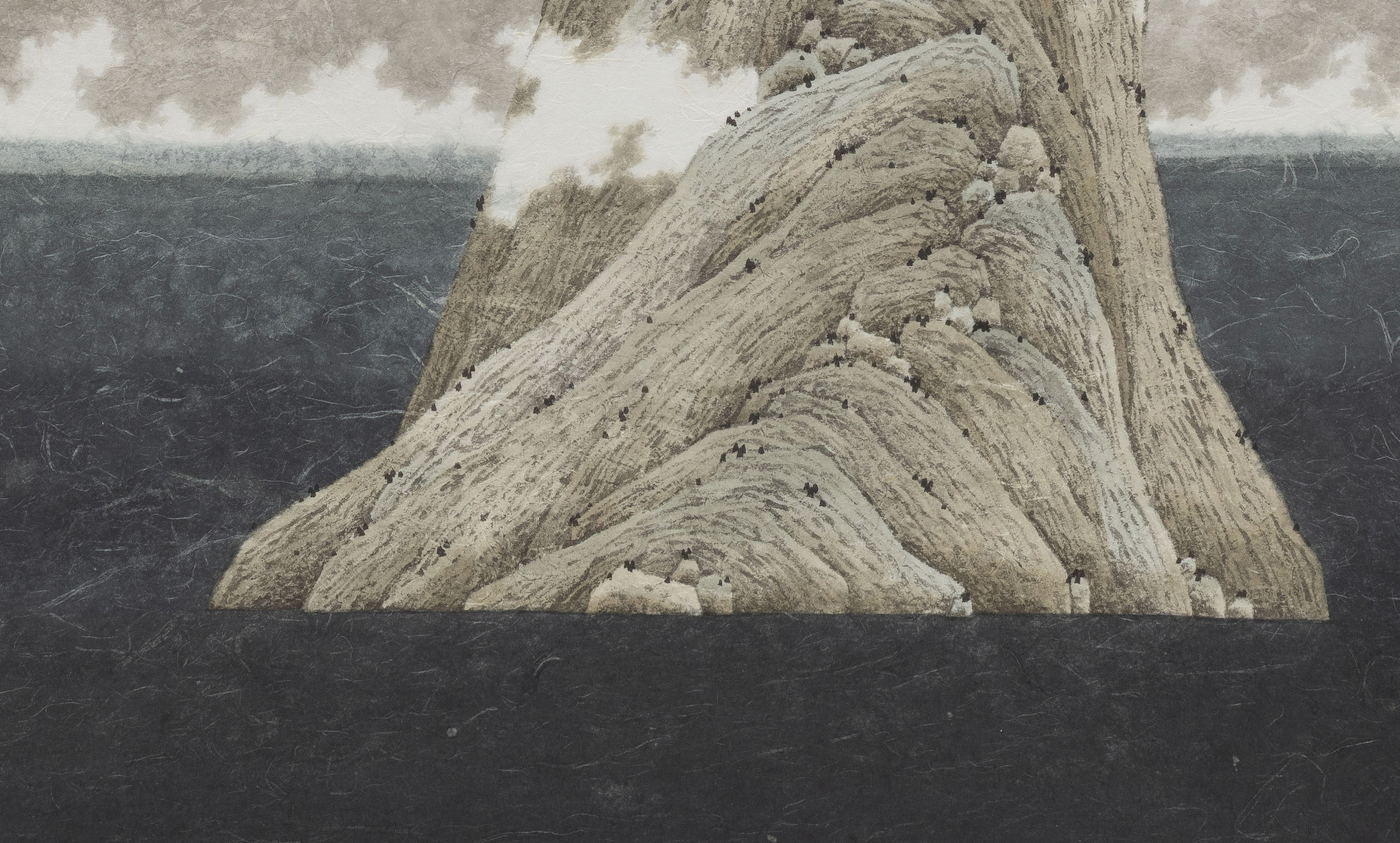
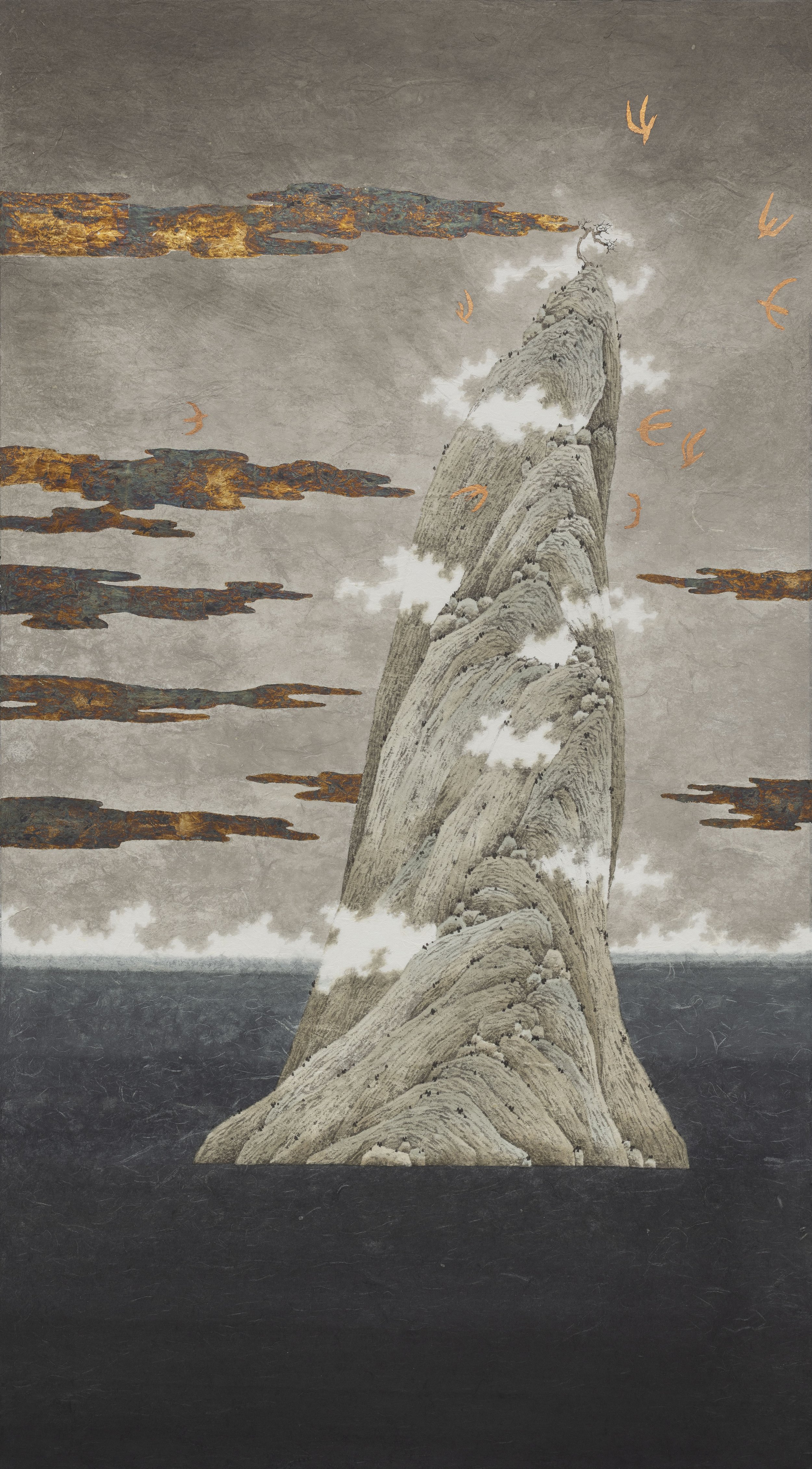
這幅作品以北宋「巨碑式山水」構圖為基調,畫面中央偏右,一座巨大而傾斜的山岳佔據主導位置。在傳統中,范寬、郭熙筆下雄偉、穩重、近乎神聖的山體,本應象徵權力、秩序與永恆。然而,這座山卻被無邊無際、漆黑如墨的大海完全包圍:它成為一座無法抵達的幽閉孤島,既不可行、不可觀、不可居,亦不可遊。原本應是精神支柱的巨碑,在虛無的水域中顯得荒謬而無力。
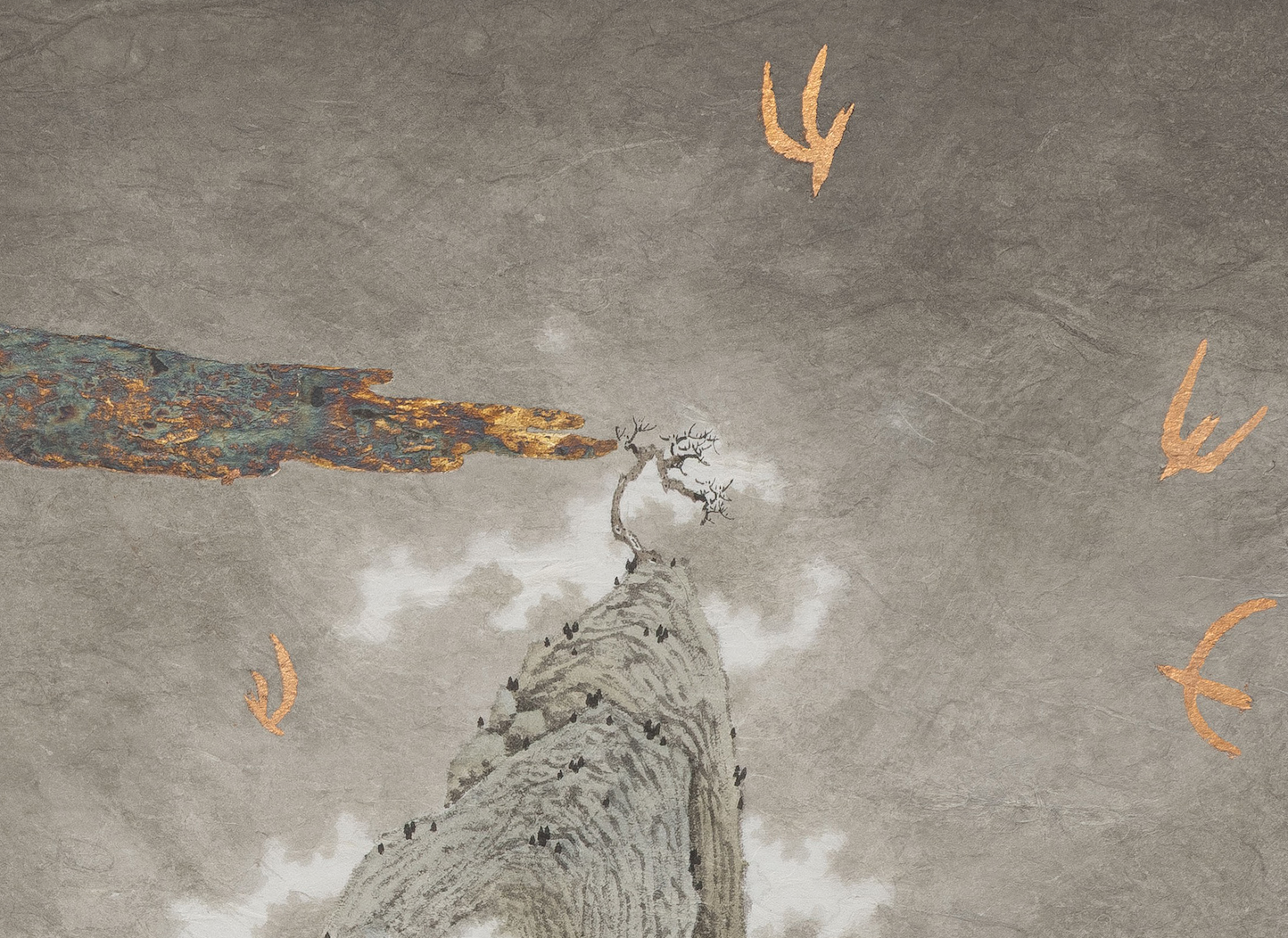
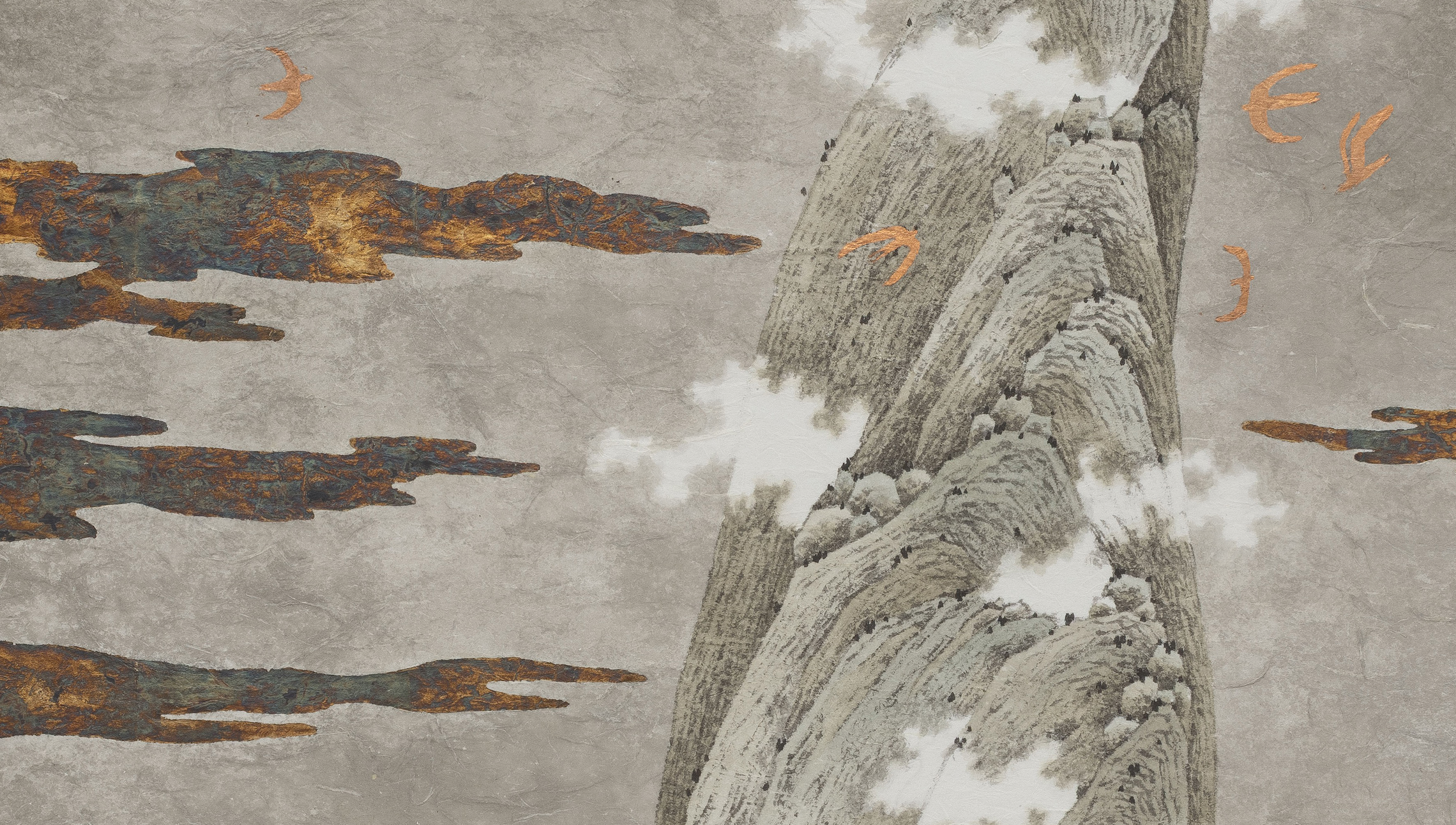
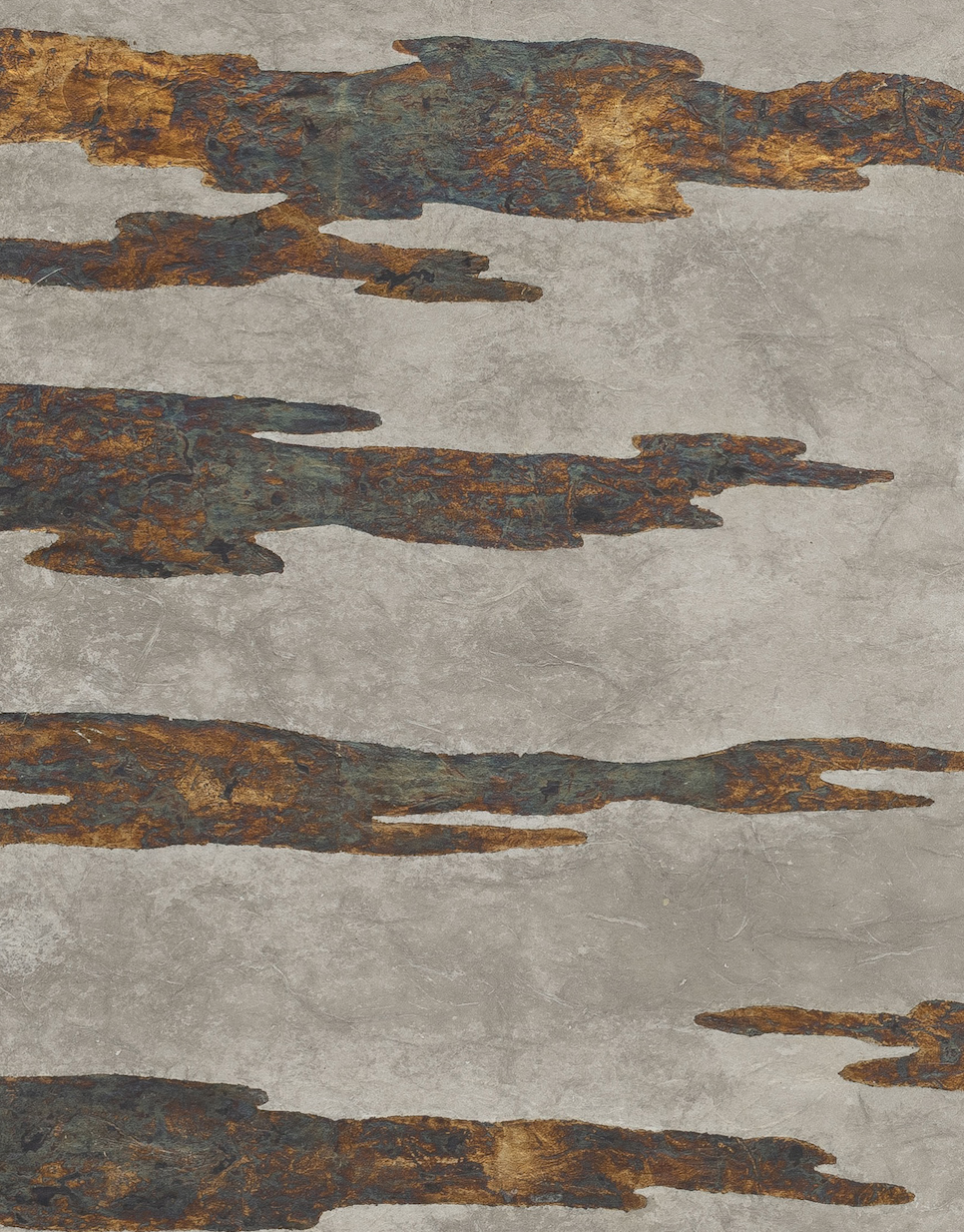
在山頂,一棵孤獨的樹木看似將被摧毀,卻仍頑強堅持,成為全畫最脆弱卻最堅強的存在。雲霧大量運用氧化銀箔,隨著時間推移,銀色逐漸黯淡、凝實,看似即將壓垮山上樹木——然而雲本無如此實體力量,這「有形」的壓迫純粹來自物料的轉化與時間的無形侵蝕。
畫面上方,銅箔製成的小鳥在寂靜的空域中亂意飛翔。即使沒有刺目的烈陽,它們在映射中散發著微弱的金光,象徵一種殘存的、孤立的,卻依然閃耀的希望。
Based on the compositional structure of the Northern Song "Monumental Shanshui," this work features a massive, leaning mountain dominating the centre-right. Traditionally, the majestic, stable, and nearly sacred mountain bodies found in Fan Kuan or Guo Xi’s works symbolised power, order, and eternity. However, this monumental form is completely encircled by a boundless, ink-black ocean: it becomes a claustrophobic, unreachable island, void of all pathways for travel, dwelling, or contemplation. The monumental colossus, intended as a spiritual anchor, stands absurd and powerless in these waters of nothingness.
At the apex, a solitary tree seems on the verge of destruction, yet stubbornly persists—the most fragile yet resilient presence in the painting. The mist and clouds utilise substantial oxidised silver foil; over time, the silver dims and solidifies, appearing as if it will crush the tree—yet, clouds possess no such physical force. This tangible oppression is purely a manifestation of material transformation and the formless erosion of time.
In the sky, small birds crafted from copper foil fly sporadically through the silent void. Even without a dazzling, blazing sun, they emit a faint golden shimmer in the reflection, symbolising a lingering, isolated, yet still radiant hope.