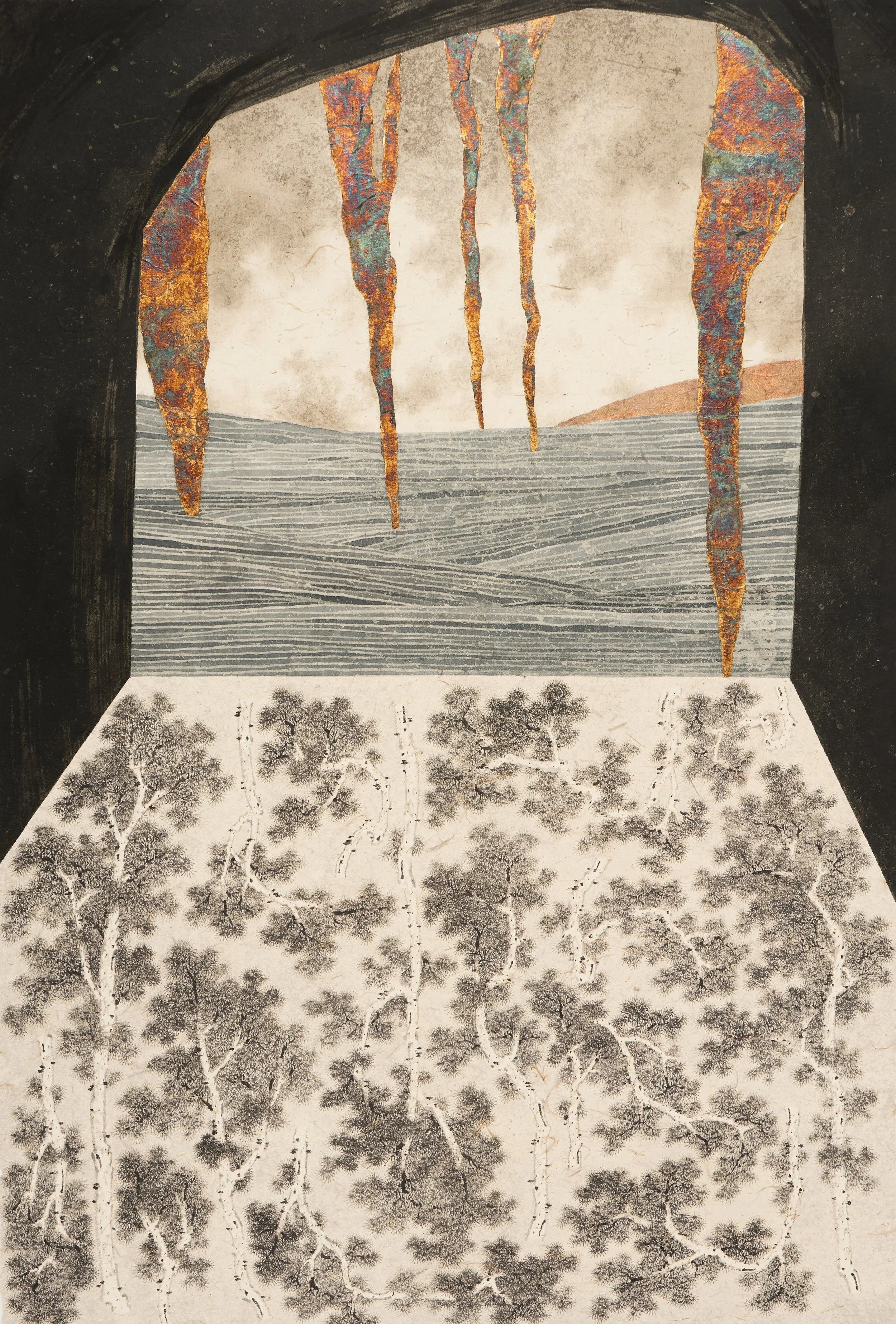
Cave no. 23: Ashes of Silence 第23窟:寂靜之燼 | 2026 | Ink, colour, silver and copper leaf on paper | 93 x 64cm
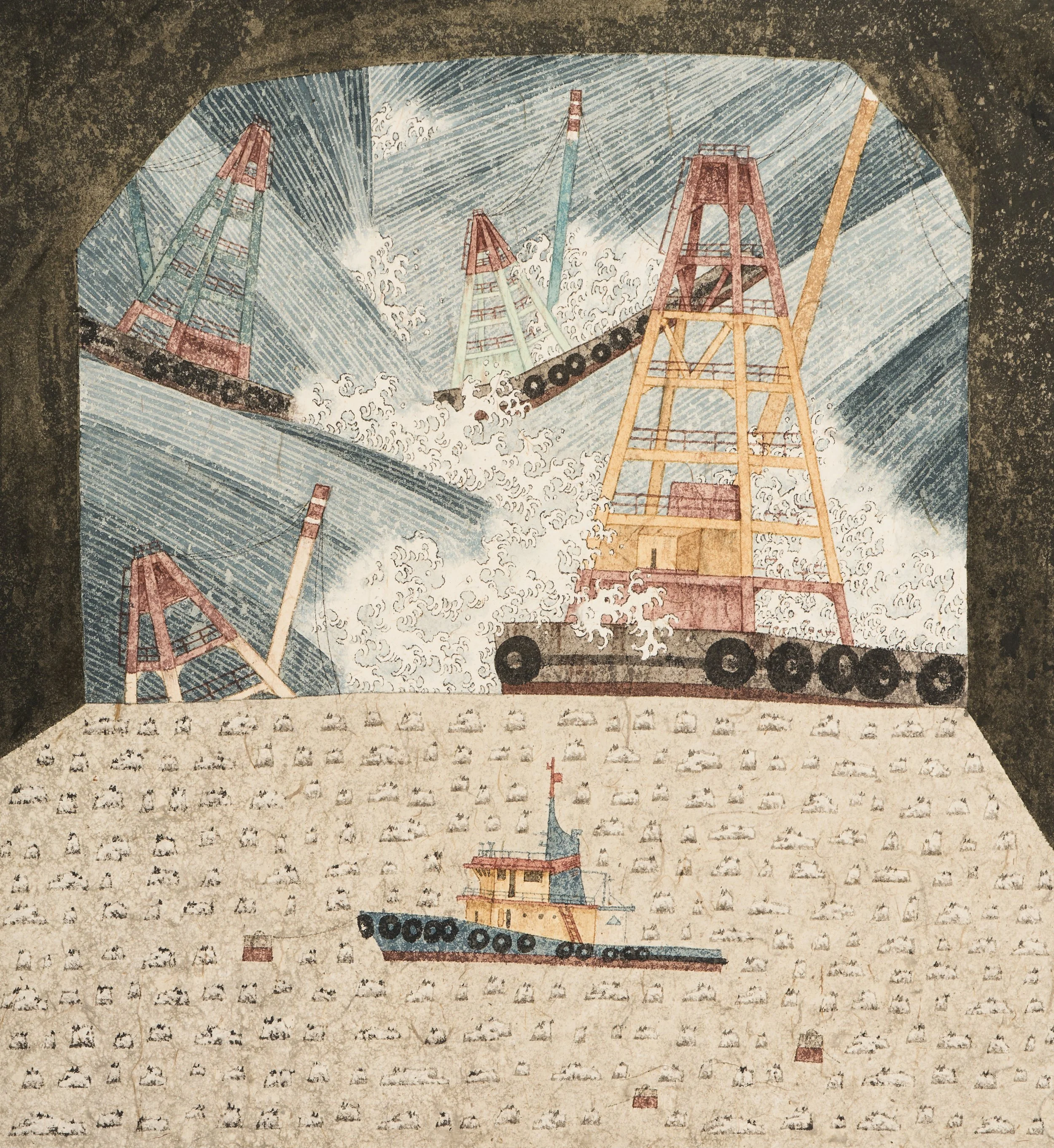
Cave no. 24: Silent Prayer 第24窟: 無聲祈求 | 2026 | Ink and colour on paper | 53 x 48 cm
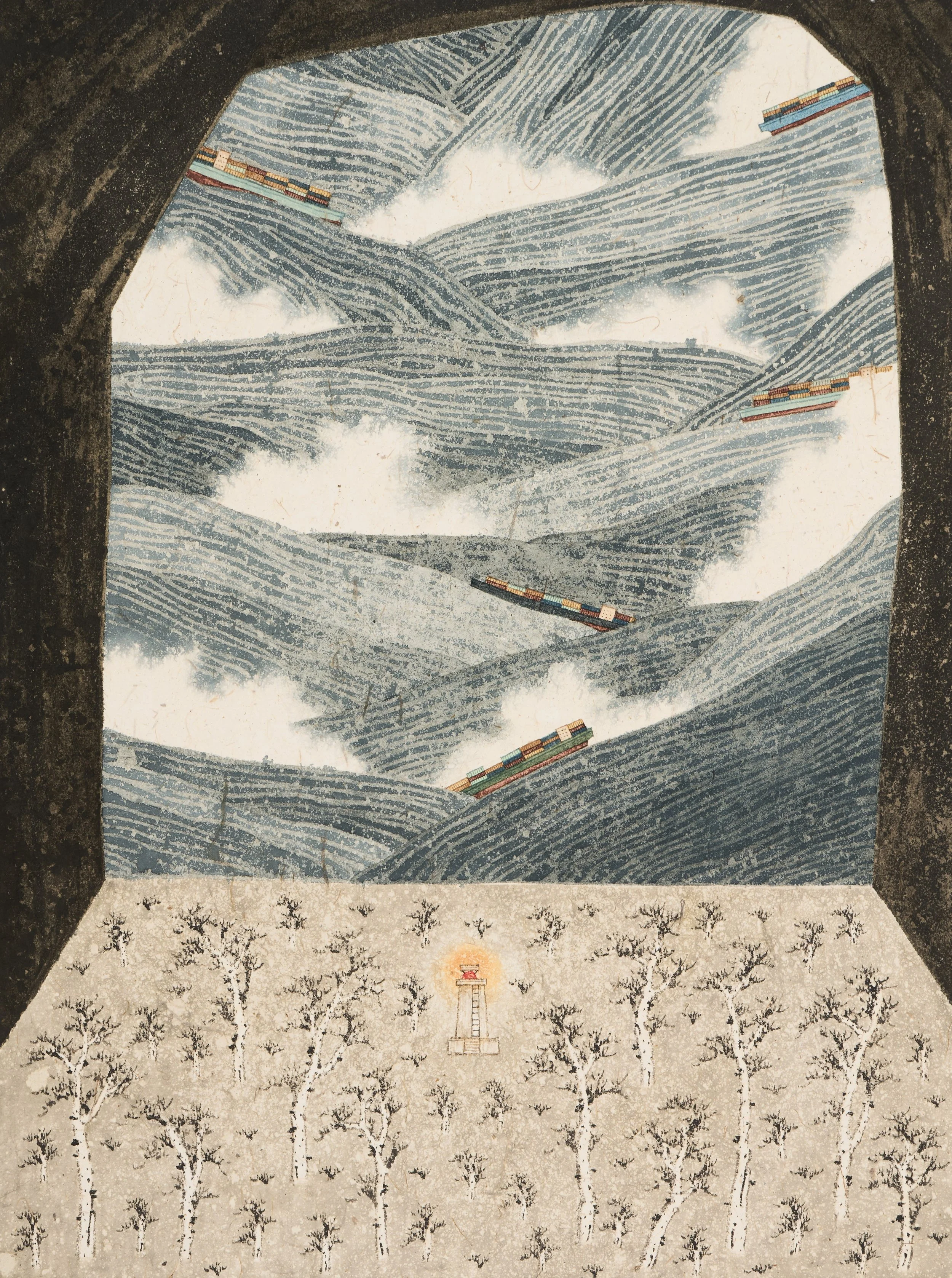
Cave no.25: The Mocking Glimmer 第25窟:微光嘲諷 | 2026 | Ink and colour on paper | 55.5 x 41 cm
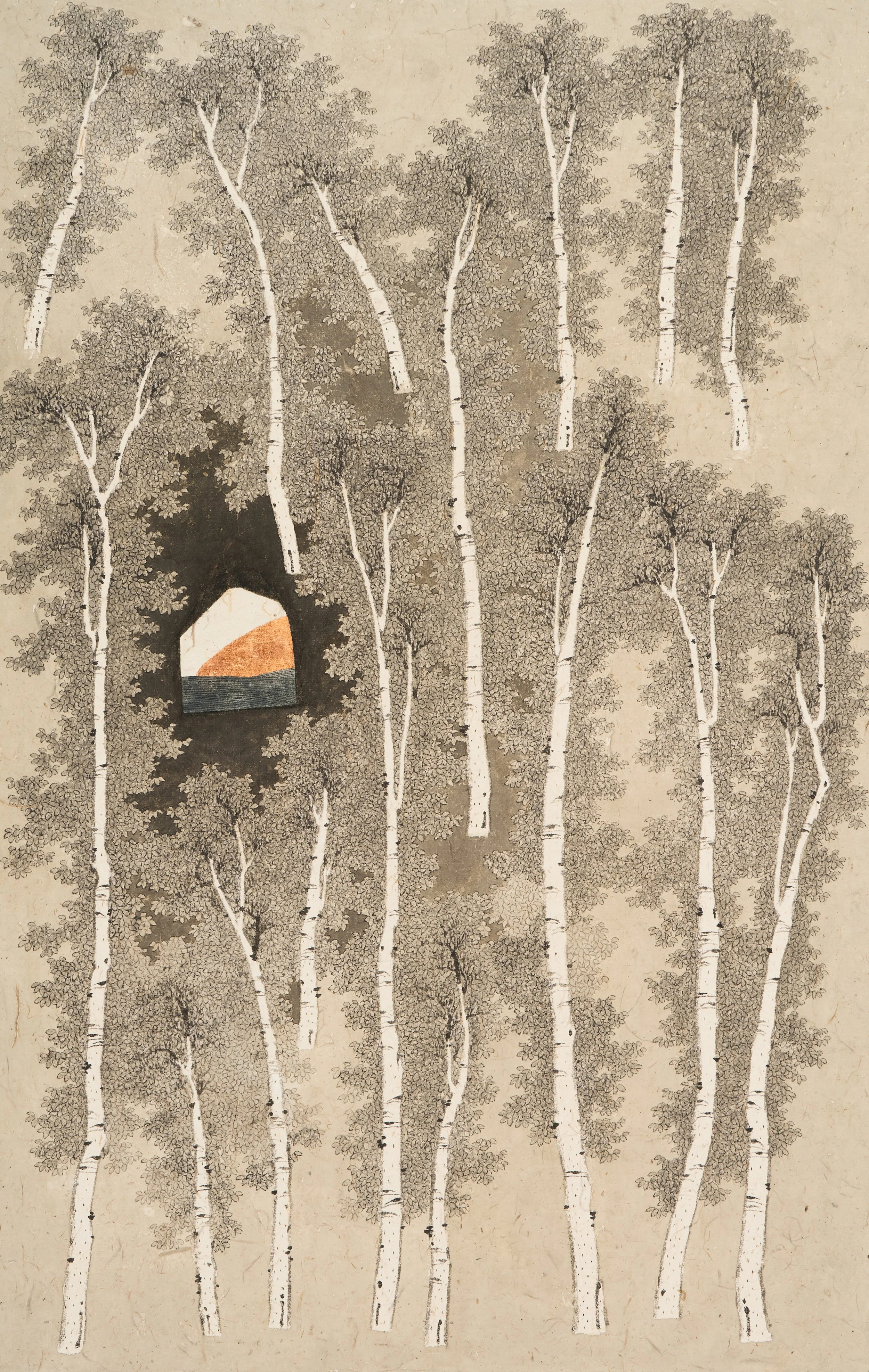
Cave no.26: Beneath the Knots 第26窟:樹結之下 | 2026 | Ink, colour and copper leaf on paper | 75 x 48.5cm
展覽以敦煌文化為核心,聚焦壁畫的顏色與線條(還相)、唐代古譜的重構與延伸(還音)、畫中日常與寓意(還人),以及古今歷史脈搏(還緣)四大方向。透過繪畫、藝術裝置、多媒體互動及沉浸式聲像等當代美學,於鬧市中建構一座當代洞窟,引領觀眾經歷聽覺與視覺的減噪與聚焦,從市區日常走入文化淨土,收拾回聲,安放內心。
The exhibition focuses on four core themes: Returning Form, focusing on the colours and lines of ancient murals; Returning Sound, reconstructing and extending Tang Dynasty music scores; Returning People, exploring daily life and symbolism within the paintings, Returning Affinities, connecting the historical pulse across past and present. Inviting audiences to step away from the daily urban routine and into a culturally pristine sanctuary, the exhibition gathers the echoes of life to help you find inner peace.
It's Karma | EKCC No. 1 Cultural Grotto
還緣 | 東九第一號文化洞窟
Project of Hong Kong Gaudeamus Dunhuang Ensemble本次展覽借用「海浪」沈流來指向當外部的動盪侵蝕結構之時,個體如何在其中維持一種仍然存在的狀態。
在傳統中國山水的宇宙圖式中,山與水構成剛與柔、實與虛的陰陽辯證。自魏晉至唐宋,山水不僅是自然的再現,更是文人「暢神」與「師法自然」的精神途徑。水,雖不居主導,卻以無形之態滲透萬物,象徵一種不爭而勝的力量──如道家所言: 上善若水、與世無爭 。
然而,當這關於「水」的理解轉向日本浮世繪,大海卻顯現出另一種面貌。在葛飾北齋的圖像中,巨浪如利爪般壓迫而下,人類的小舟在浪尖搖曳。水不再是溫柔的承載,而成為一種可摧毀一切的無形力量──虛能勝實、無形能摧毀有形。
展覽「浮世沉流」正是從這轉變出發。在當代處境中,動盪不僅來自可見的社會衝突,更來自那些難以指認卻持續運作的力量:時間、訊息、情緒與歷史的餘震。當現實中的力量看似堅不可摧時,「虛」的力量──如水、雲與風──正以更隱密且具摧毀性的方式悄悄運作。它們如水般滲透,緩慢而無聲地侵蝕現實,使看似穩固的結構逐漸鬆動、下沉。
The exhibition takes “sinking currents” as its central condition, examining how individuals sustain a mode of existence as external turbulence erodes structural stability.
Within the cosmological schema of traditional Chinese landscape painting, mountains and water form a dialectic of yin and yang—hard and soft, solid and void. From the Wei and Jin dynasties through the Tang and Song, landscape was never merely a representation of nature; it was a spiritual pathway for the literati, a means of “roaming the spirit” and “taking nature as mentor.” Water, though never dominant, permeates all things through its formlessness, embodying a strength that does not contend—as the Daoists tradition holds: The highest goodness is like water, benefiting all things without contention.
Yet when this understanding of water turns toward the ukiyo-e of Japan, the sea reveals a different face. In The Great Wave off Kanagawa by Katsushika Hokusai, enormous waves press down like claws, and tiny human boats sway upon their crests. Water is no longer a gentle carrier but an invisible force capable of destroying everything—void conquering substance, formlessness shattering form.
Sinking in the Floating World departs precisely from this shift. In contemporary circumstances, turbulence comes not only from visible social conflicts but also from those forces that are difficult to name yet persistently operative: time, information, emotion, and the aftershocks of history. When the forces of reality appear unassailable, the power of the “void”—water, clouds, wind—operates in ways more insidious and destructive. They seep like water, slowly and silently eroding reality, causing once-stable structures to loosen and sink. Details
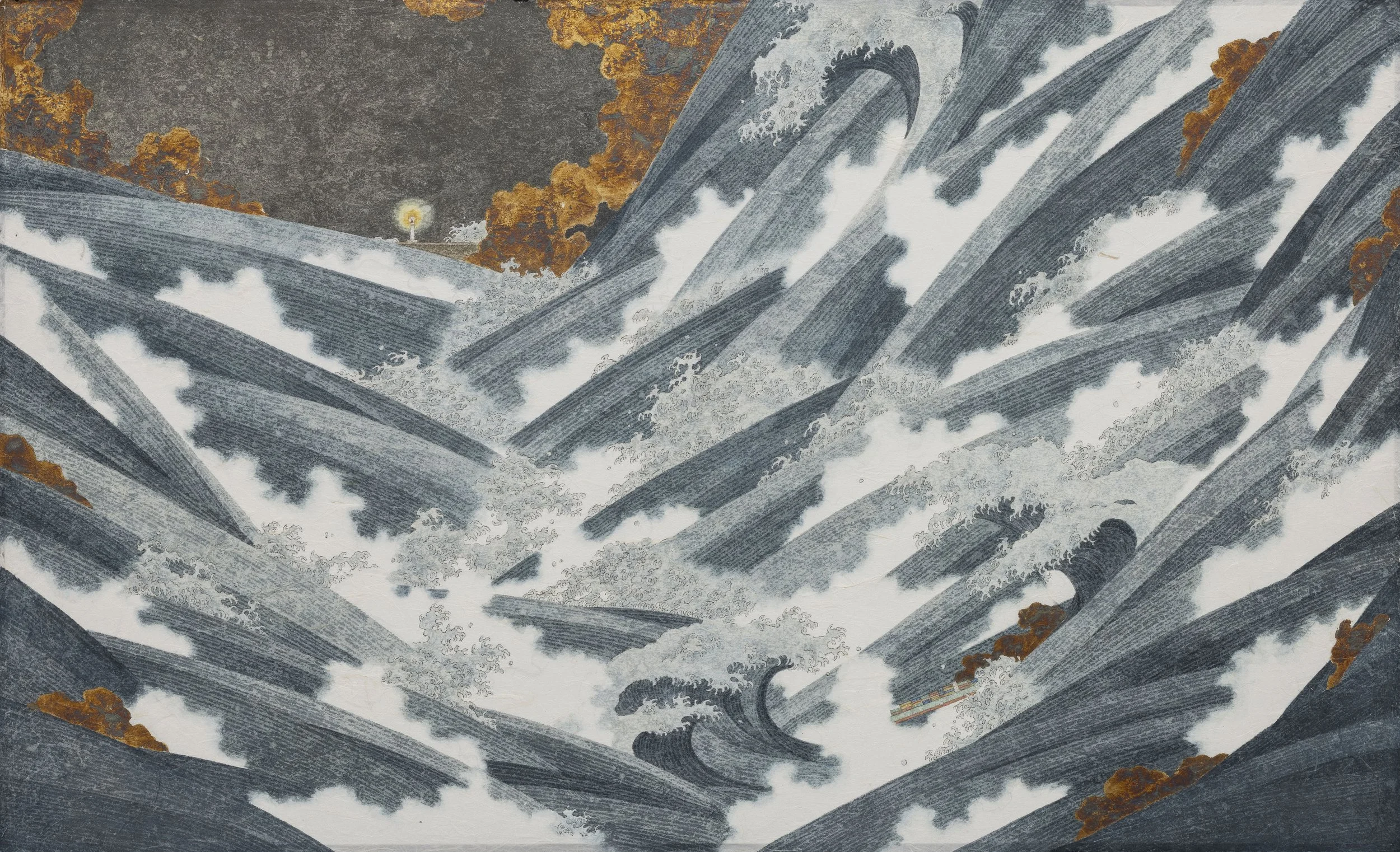
Echoes of Spectral Signals 幽靈信號的回蕩 | 2026 | Ink, colour and silver leaf on paper | 59×98cm
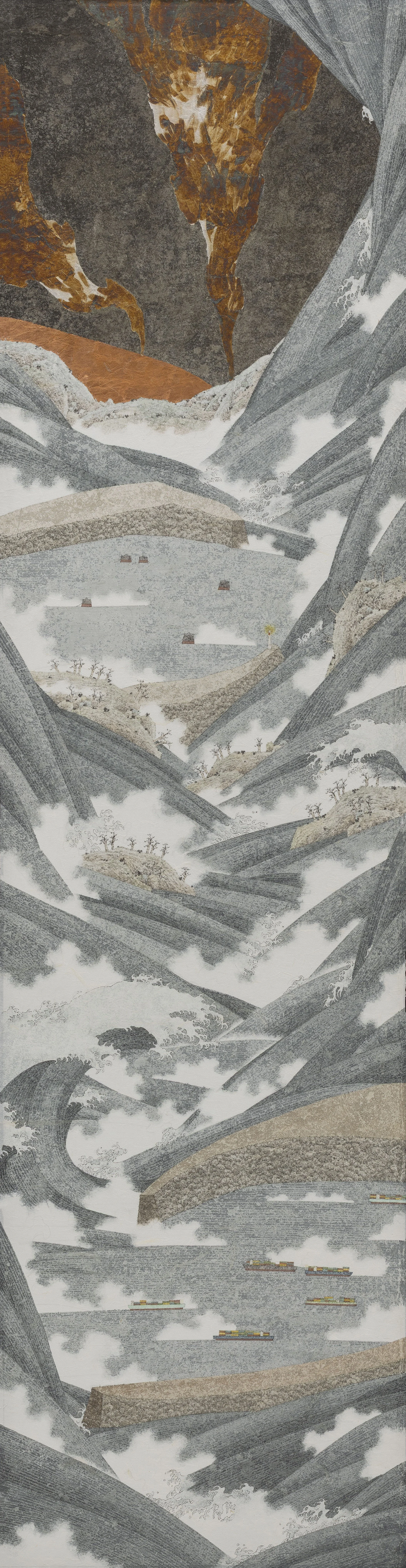
The Frozen Storm II 凝固的風暴II | 2026 | Ink, colour, silver and copper leaf on paper | 199×49cm
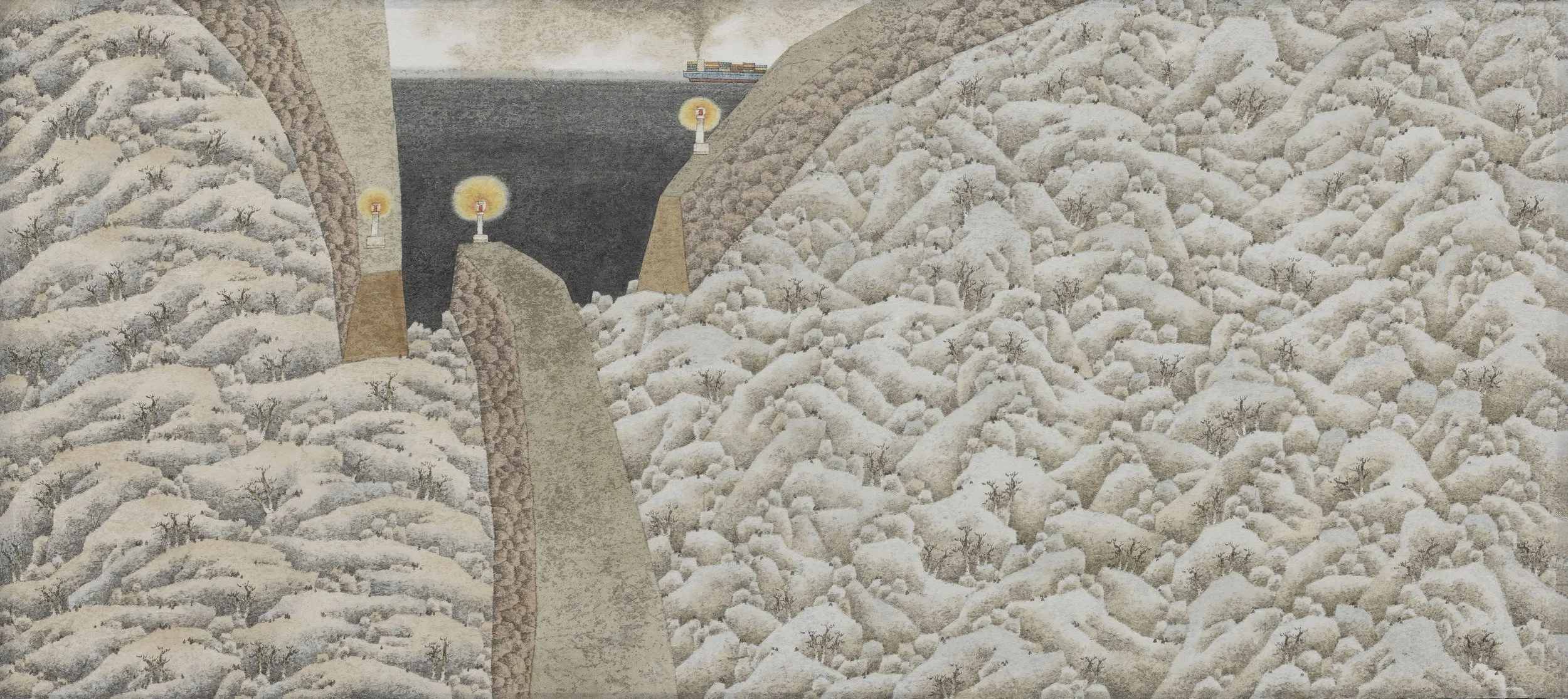
The Deserted Harbour 荒港 | 2026 | Ink, colour and silver leaf on paper | 45×98cm
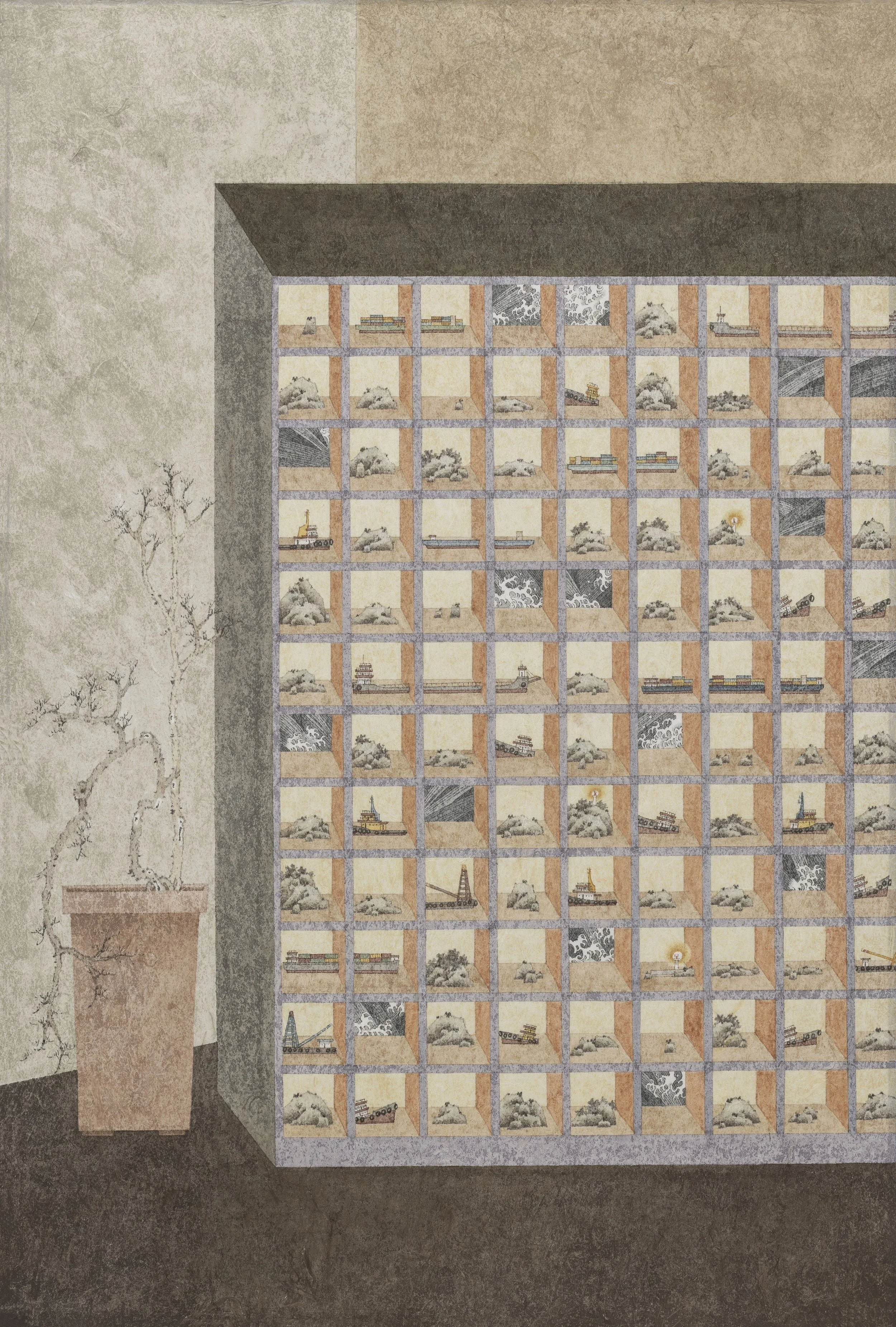
Winter and the Cabinet of Landscapes 寒冬與藏景 | 2026 | Ink and colour on paper | 98 x 66 cm
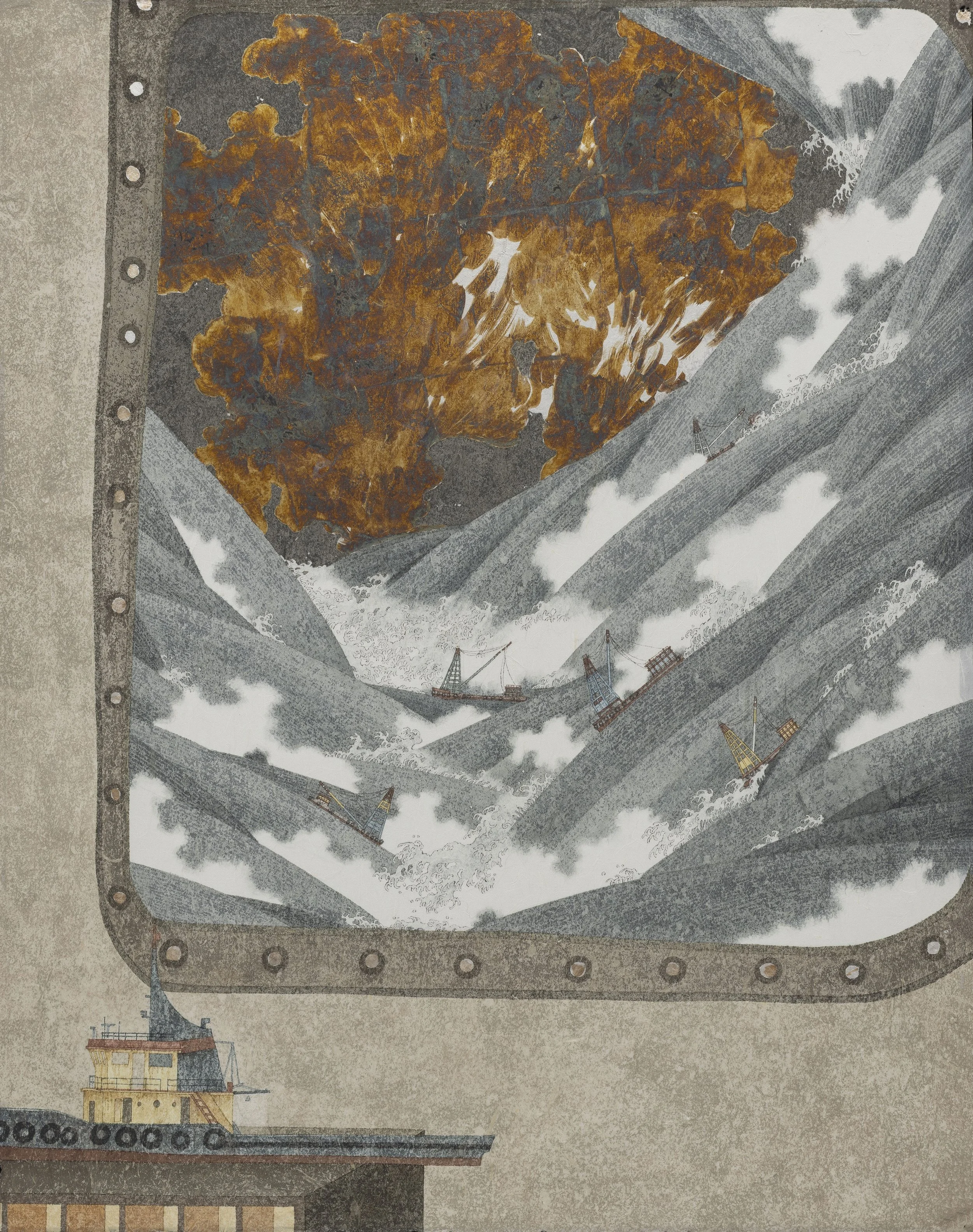
The Absent Tugboat 缺席的拖船 | 2026 | Ink, colour and silver leaf on paper | 98 x 77 cm
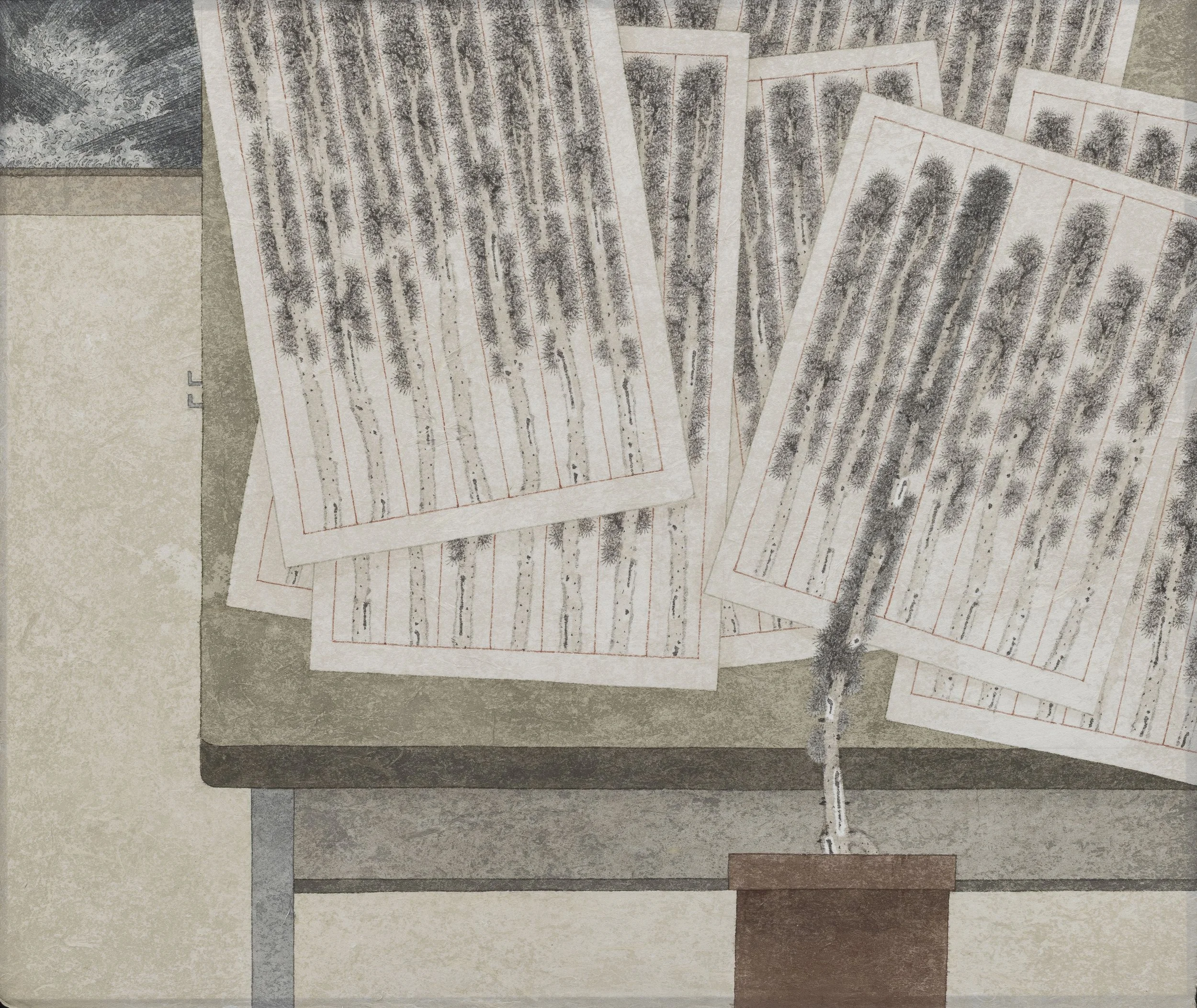
The Pine Script 松書 | 2026 | Ink and colour on paper | 52 x 62 cm | 2026
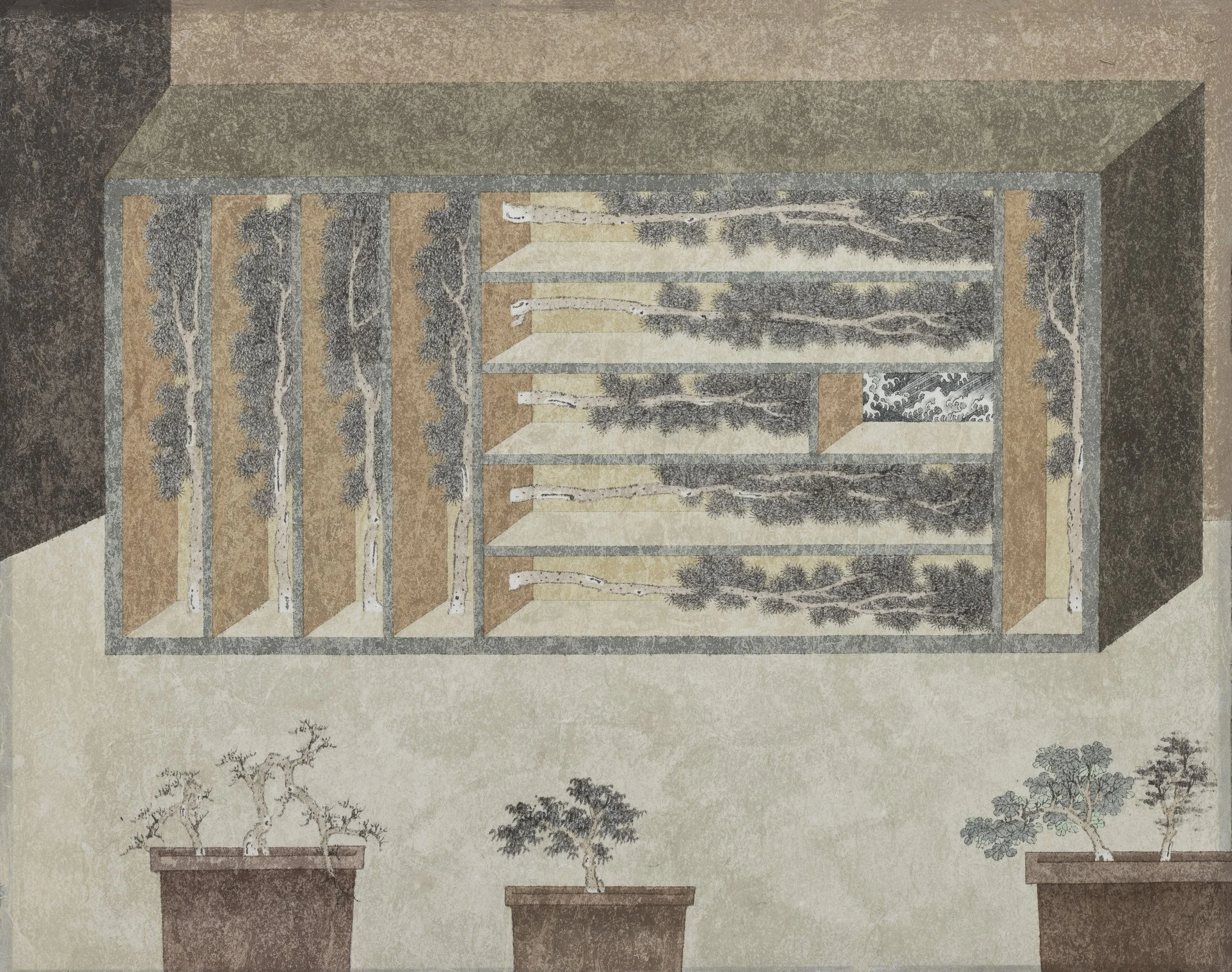
The Cabinet of Pine 藏松 | 2026 | Ink and colour on paper | 56 x 70 cm
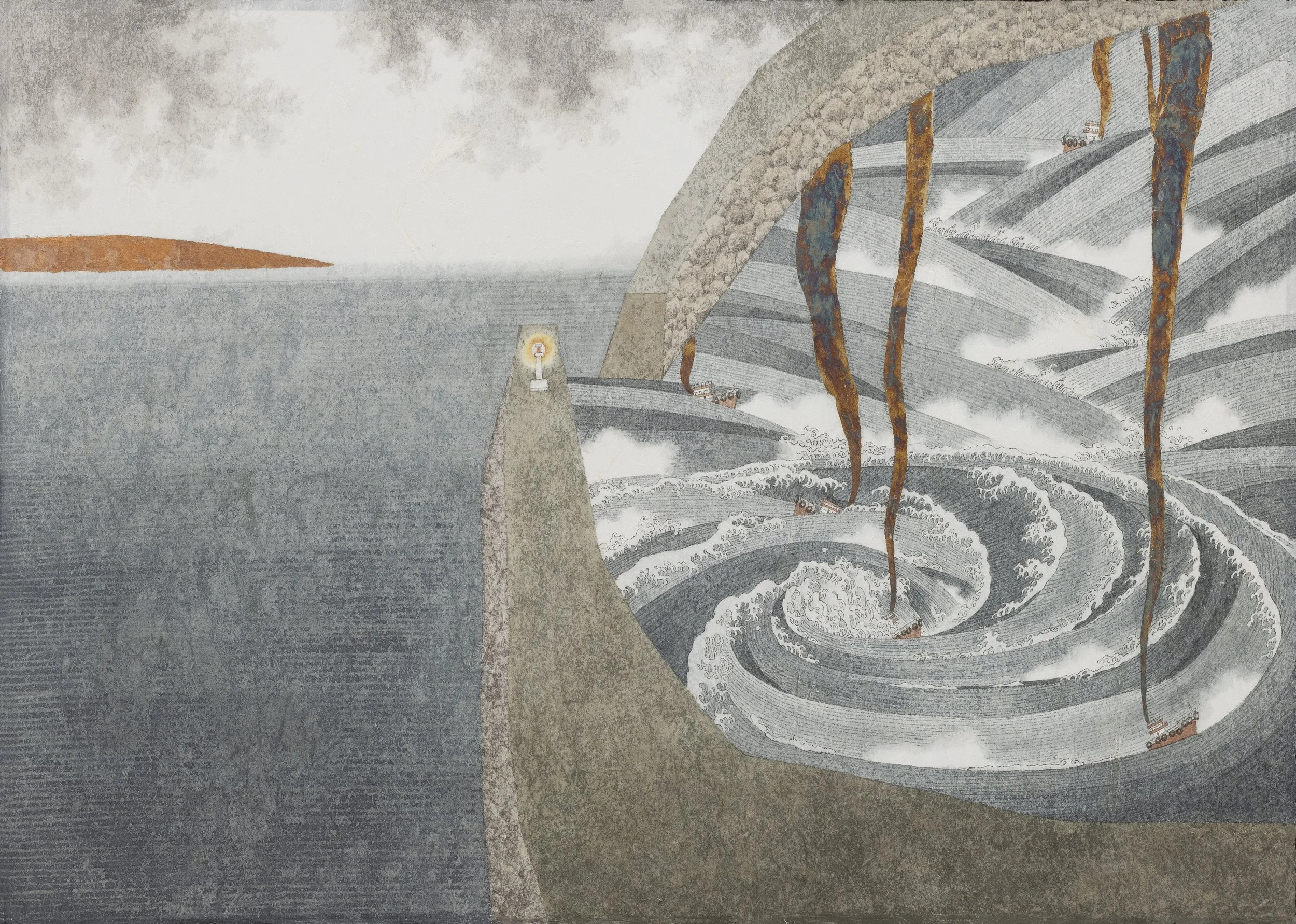
The Typhoon Harbour 風港 | 2026 | Ink, colour and silver leaf on paper | 57 x 80 cm
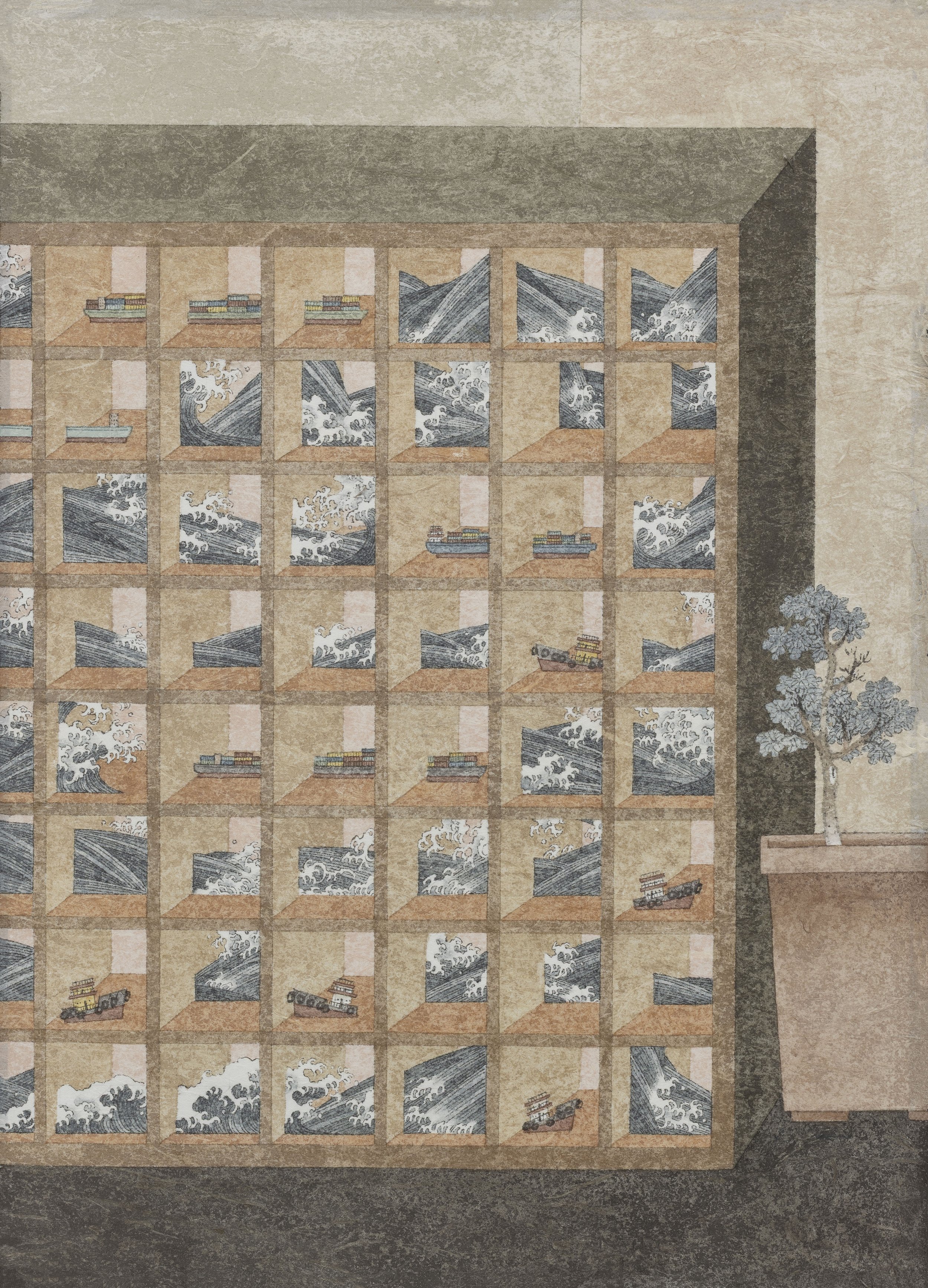
The Cabinet of Waves 巨浪之櫃 | 2026 | Ink and colour on paper | 58 x 42 cm
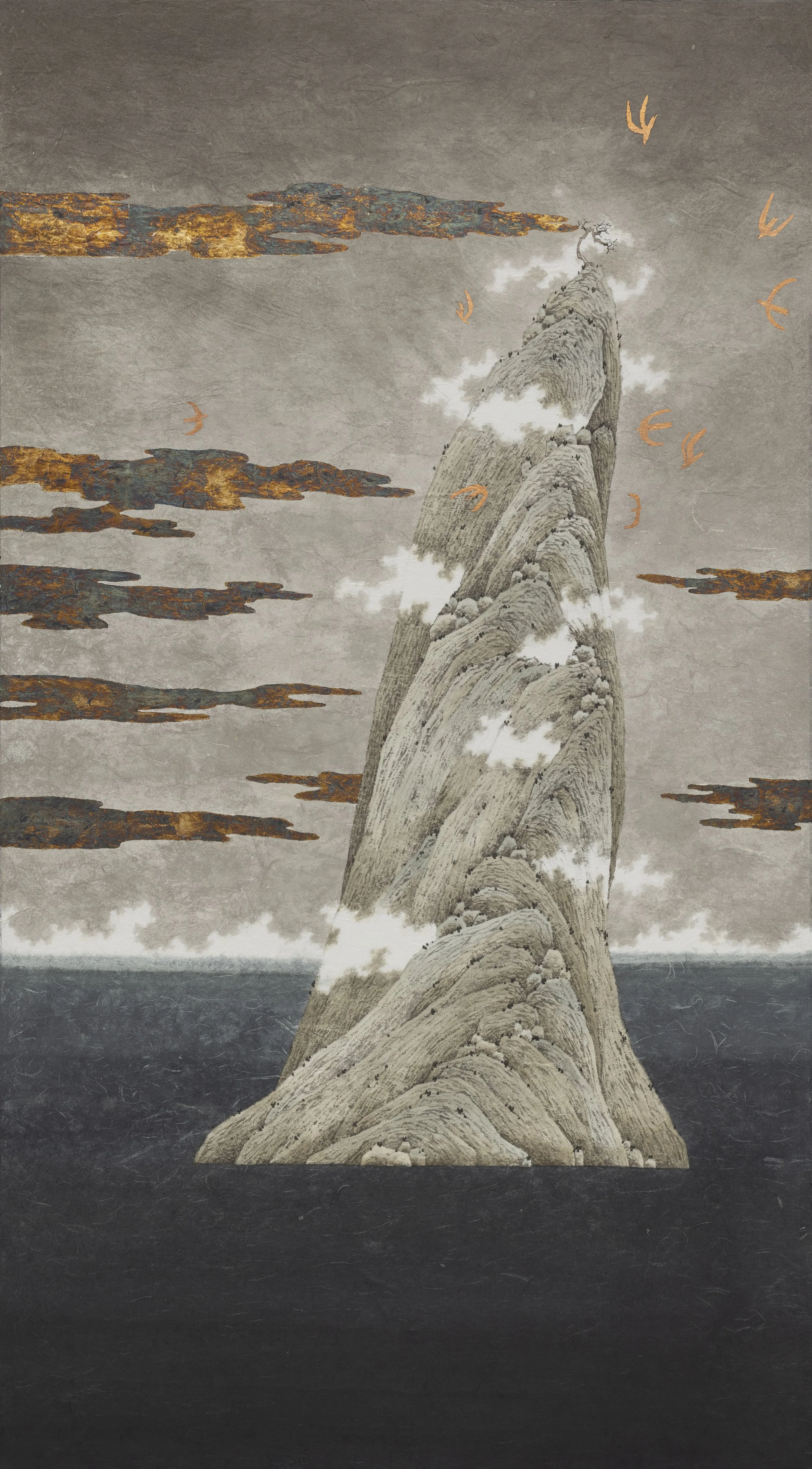
Solitary Tree on Isolated Isle 孤島獨樹 | 2026 | Ink, colour, silver and copper leaf on paper | 142 x 79 cm
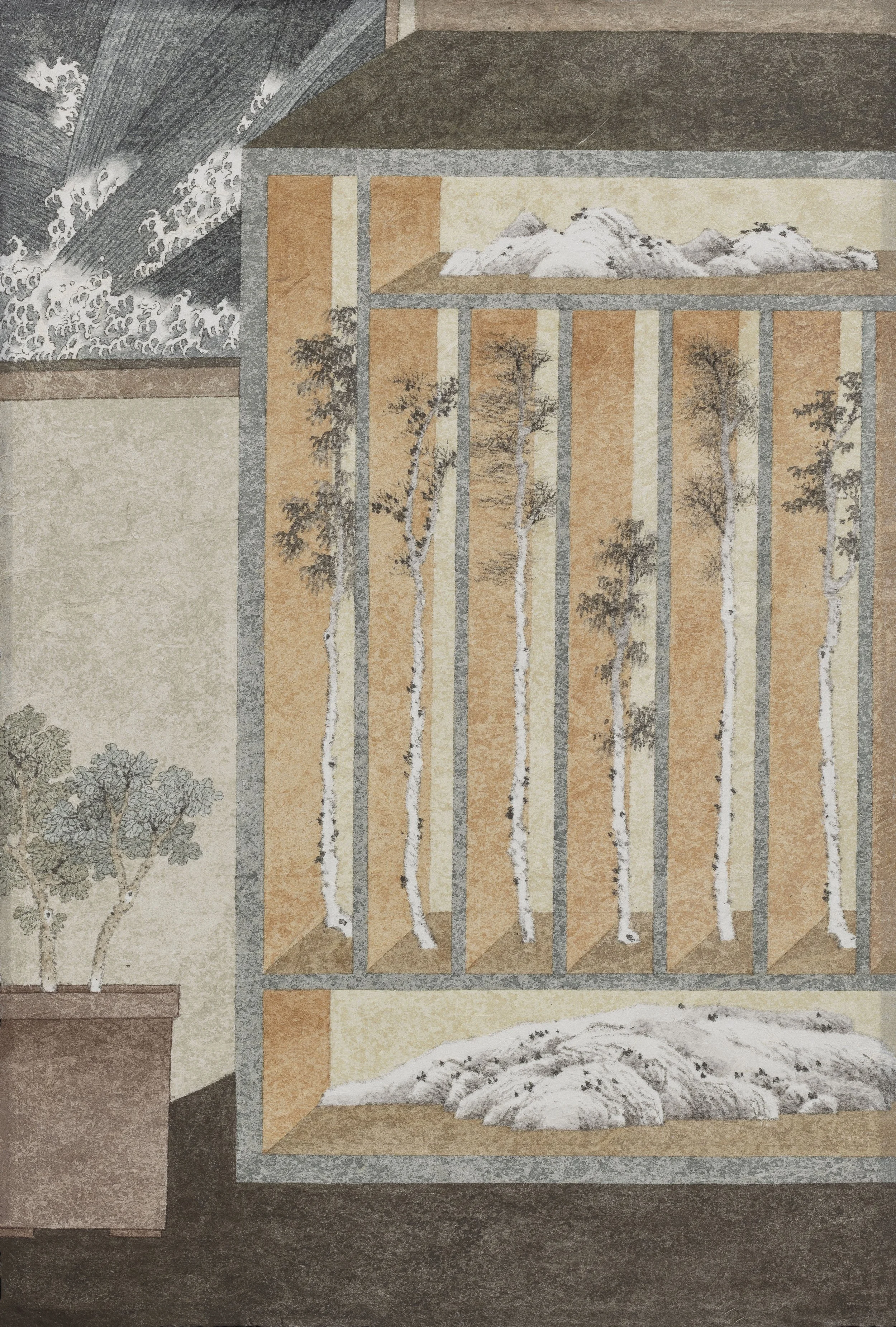
Archiving the Six Gentlemen 櫃中六君子 | 2026 | Ink and colour on paper | 52.5 x 35 cm
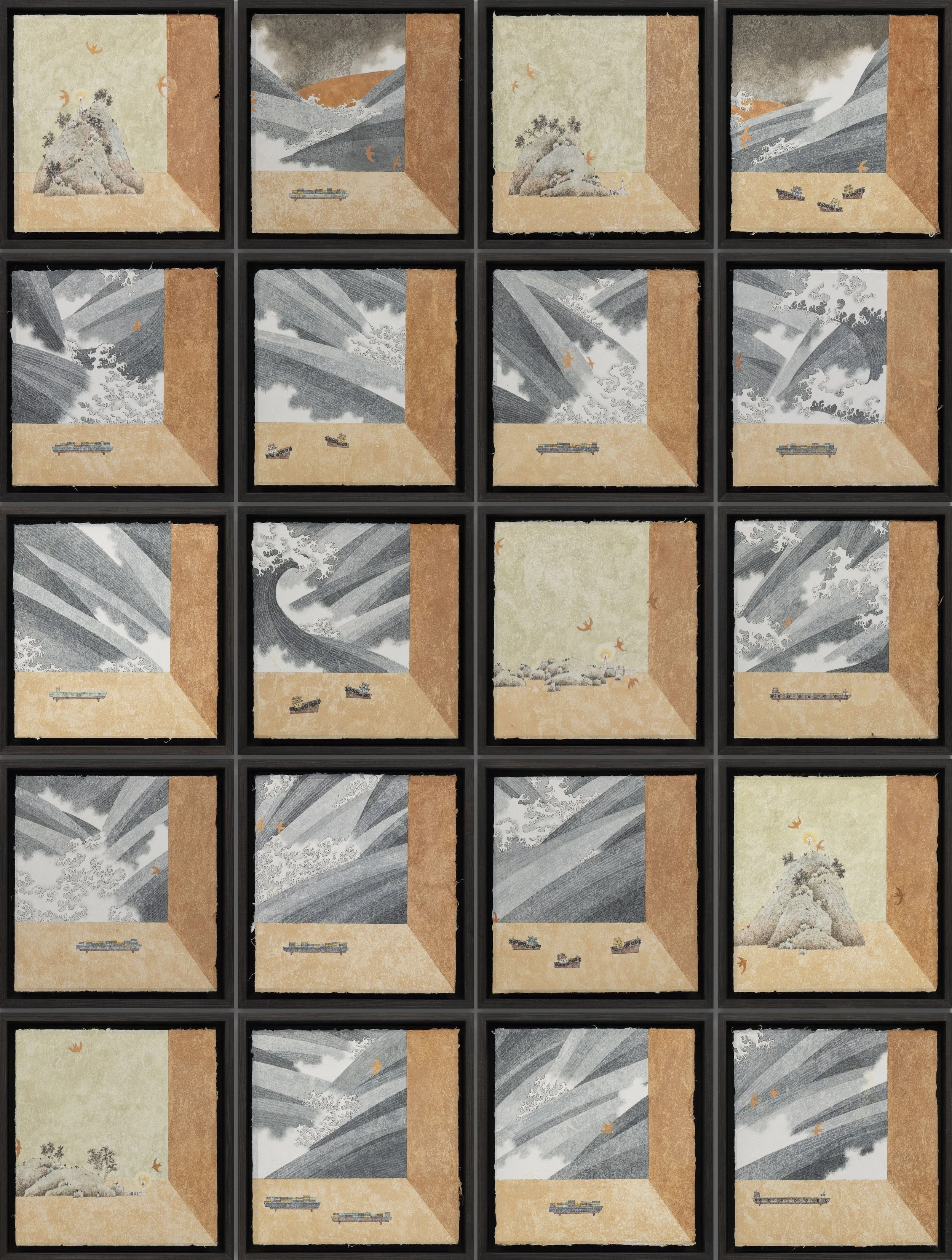
The Cabinet of the Floating World 浮世櫃 | 2026 | Ink, colour and copper leaf on paper | Set of 20 : 33 x 31 cm each
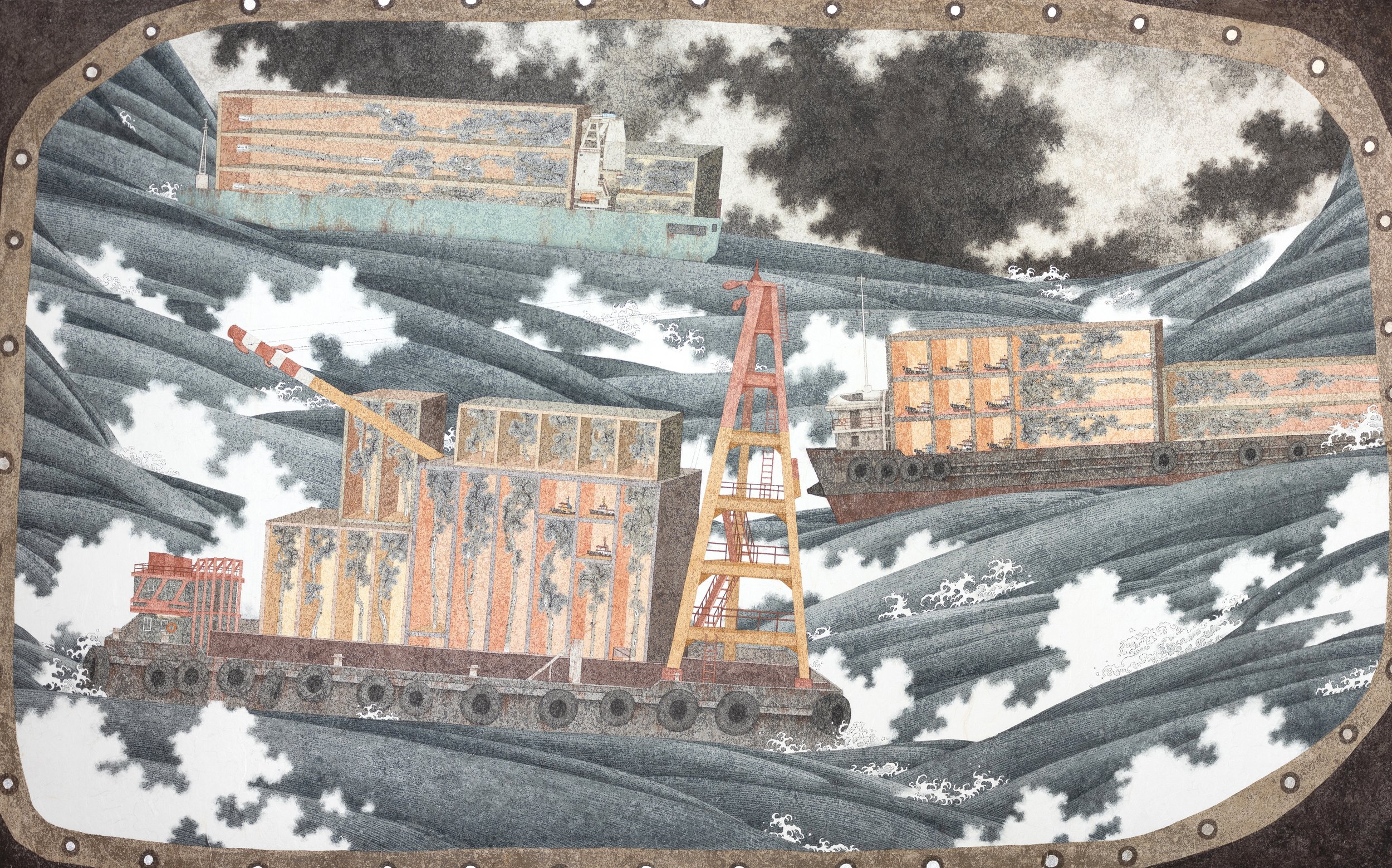
The Exiled Drift 被放逐的漂流 | 2026 | Ink, colour and silver leaf on paper | 98 x 158 cm
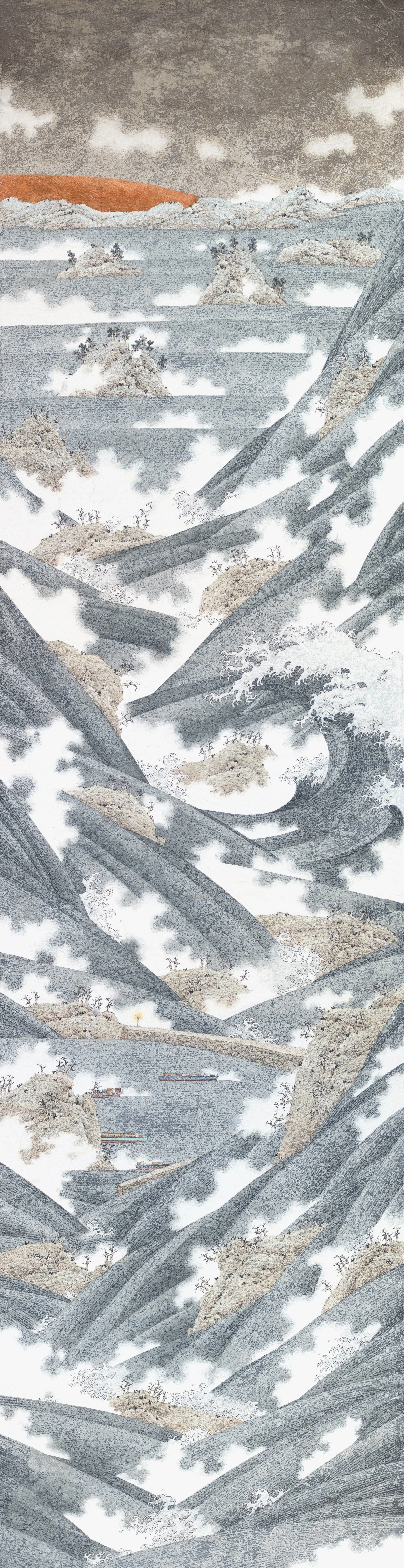
The Frozen Storm 凝固的風暴 | 2026 | Ink, colour and copper leaf on paper | 199 x 49 cm
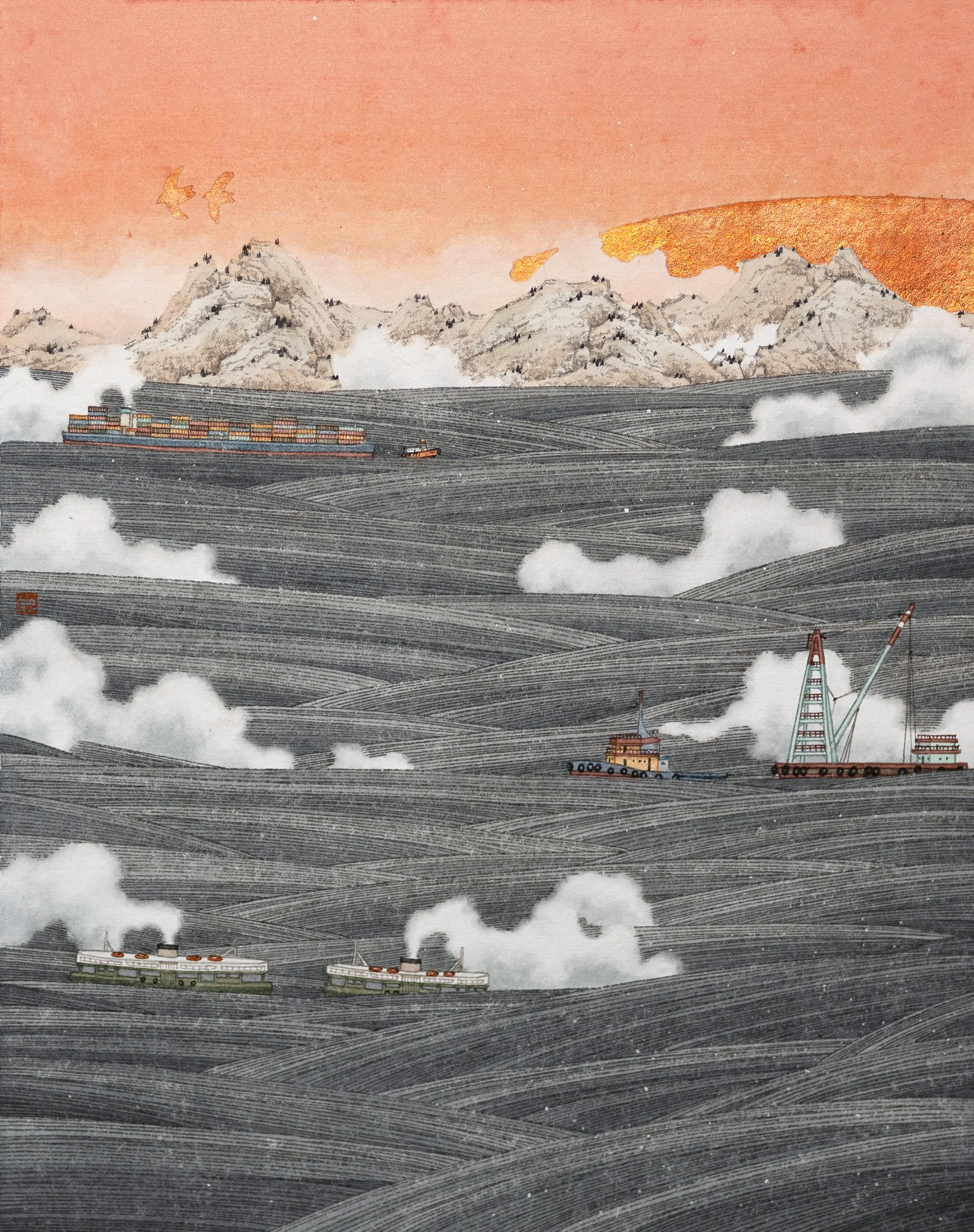
In Pair We Sail 伴航 | 2026 | Ink, colour and silver leaf on paper | 32.5 x 25.5 cm
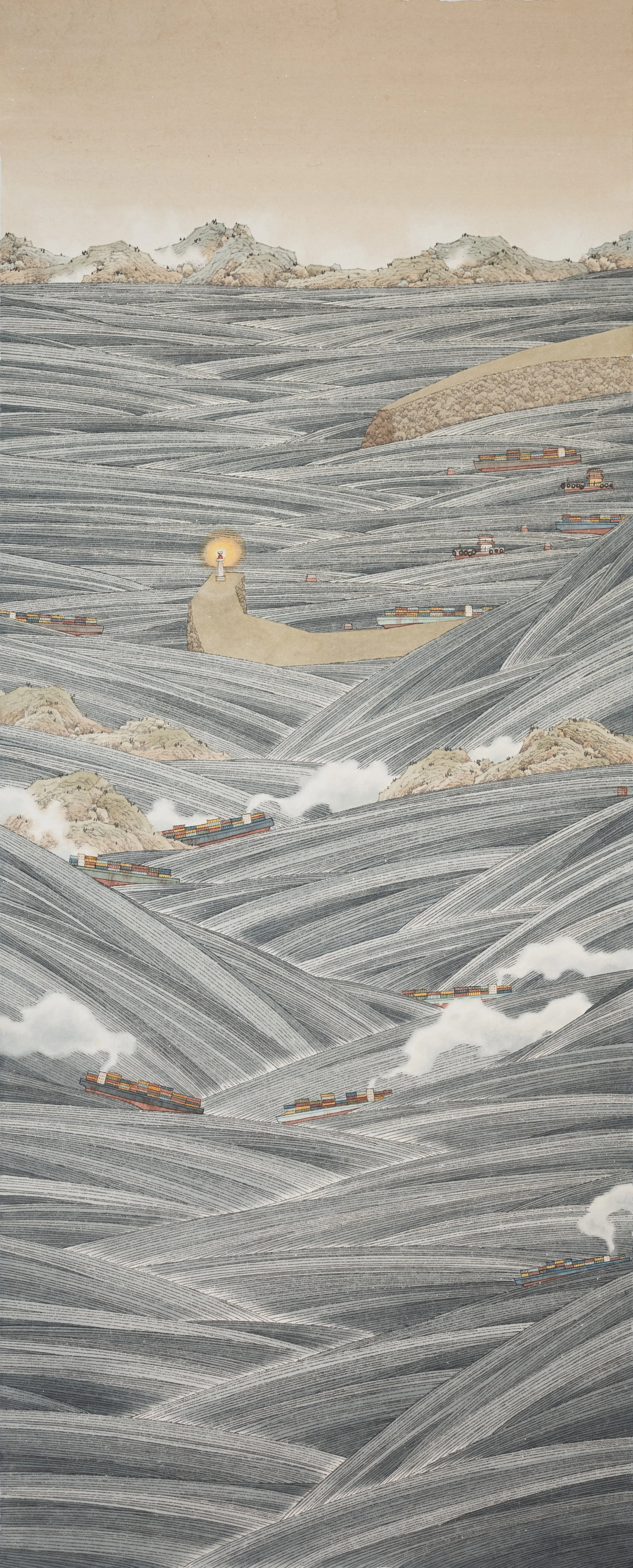
Beacon of Hope 希望燈塔 | 2026 | Ink and colour on paper |90 x 36cm