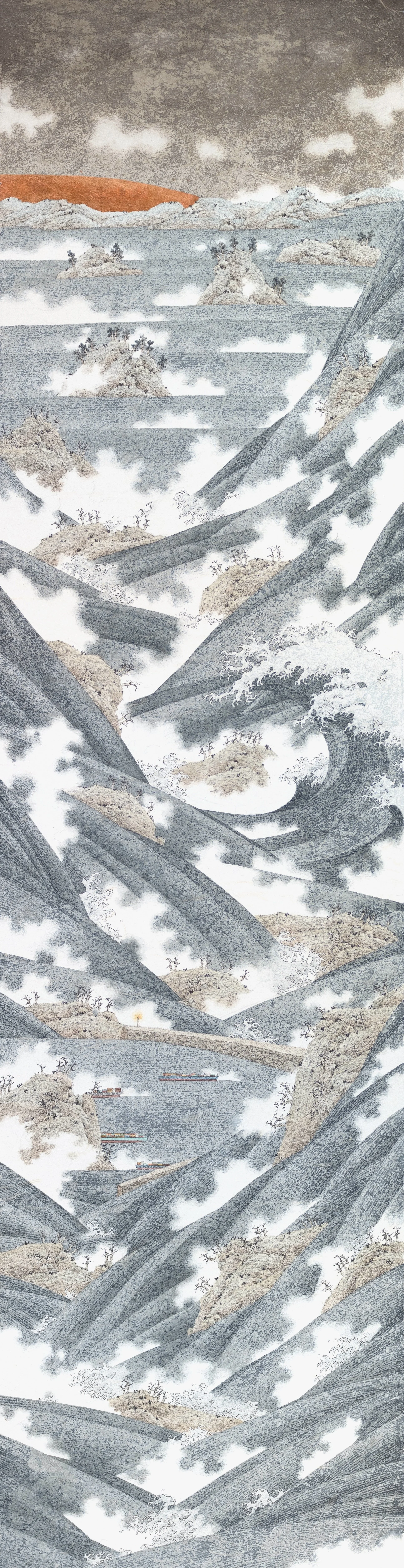
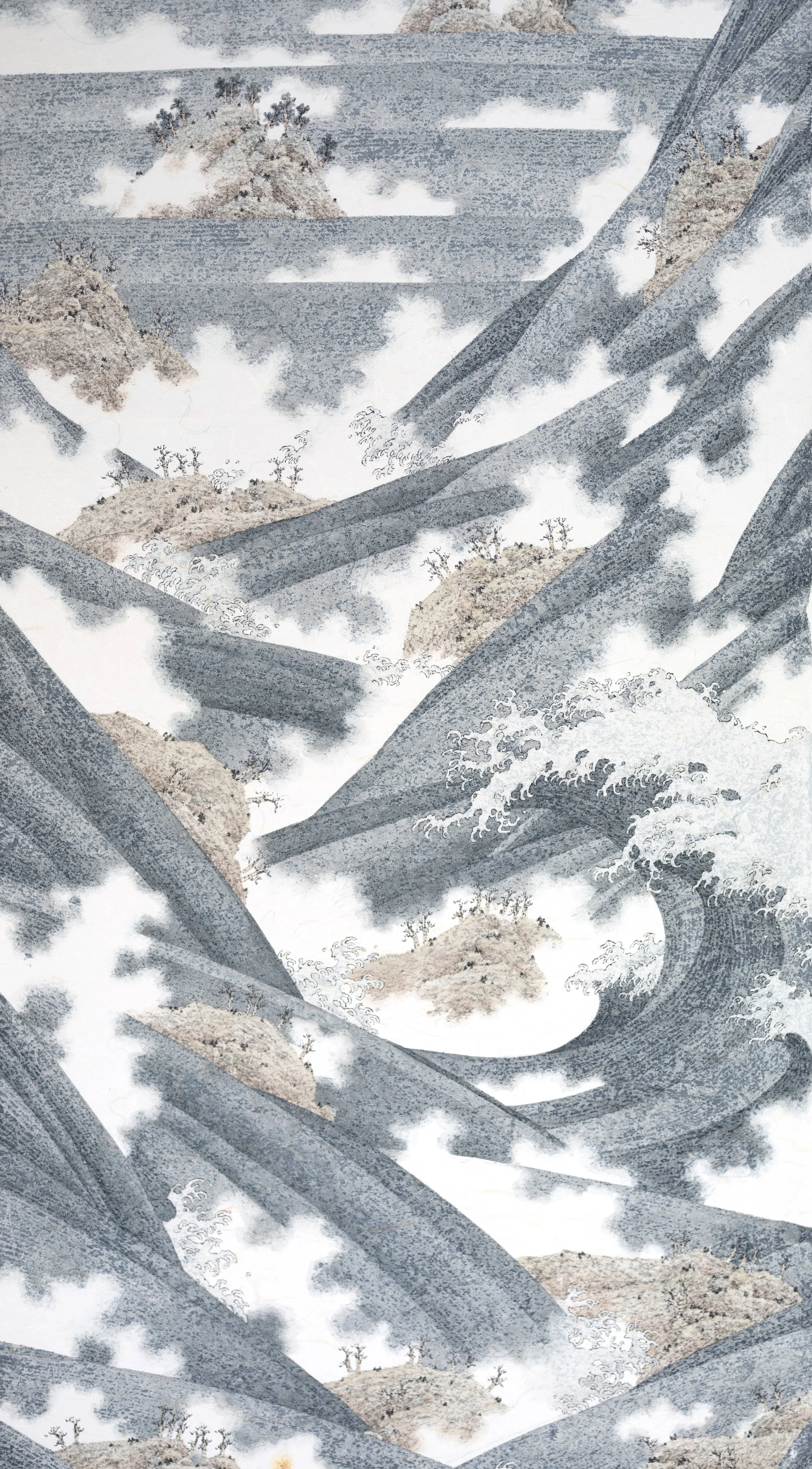
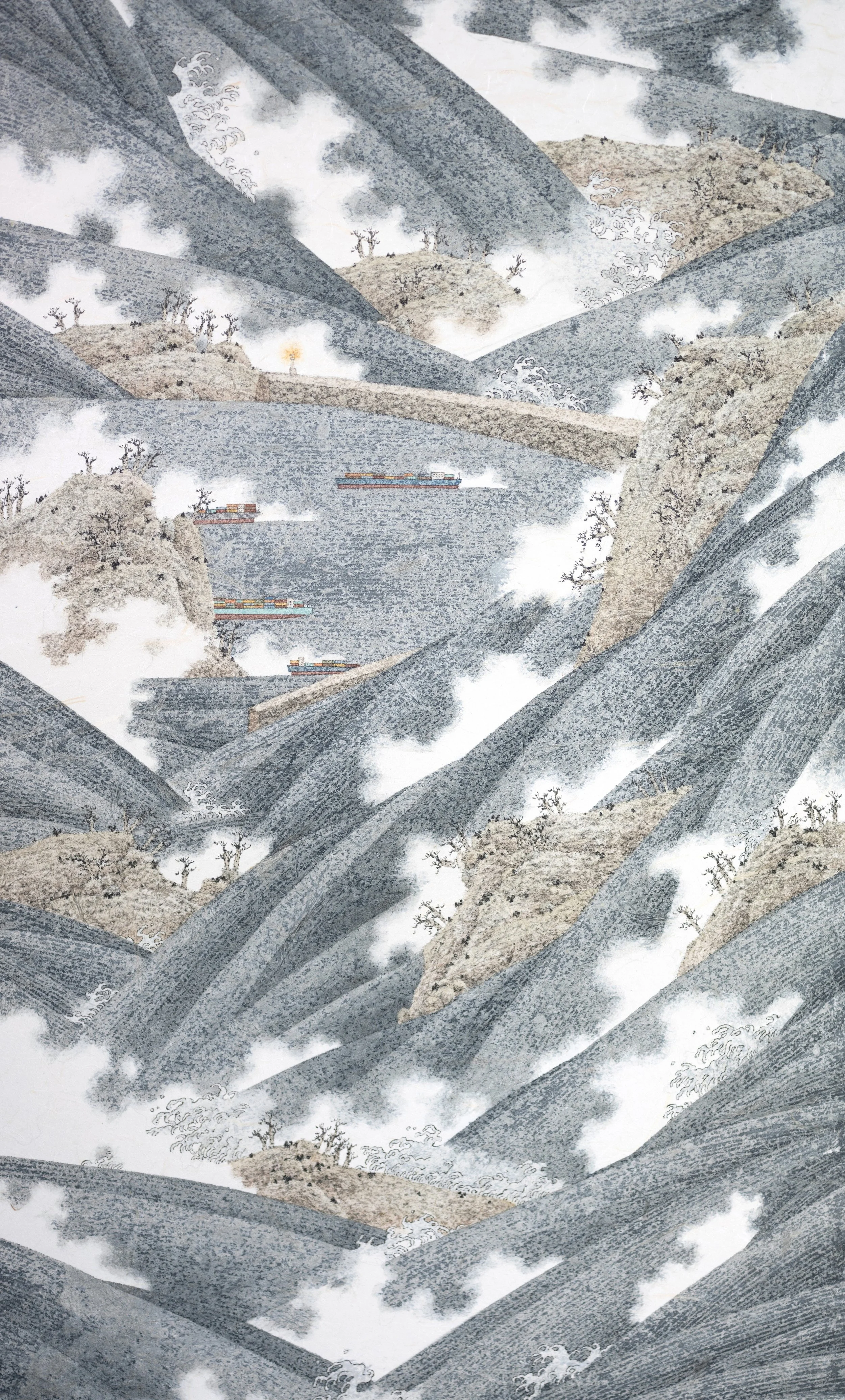
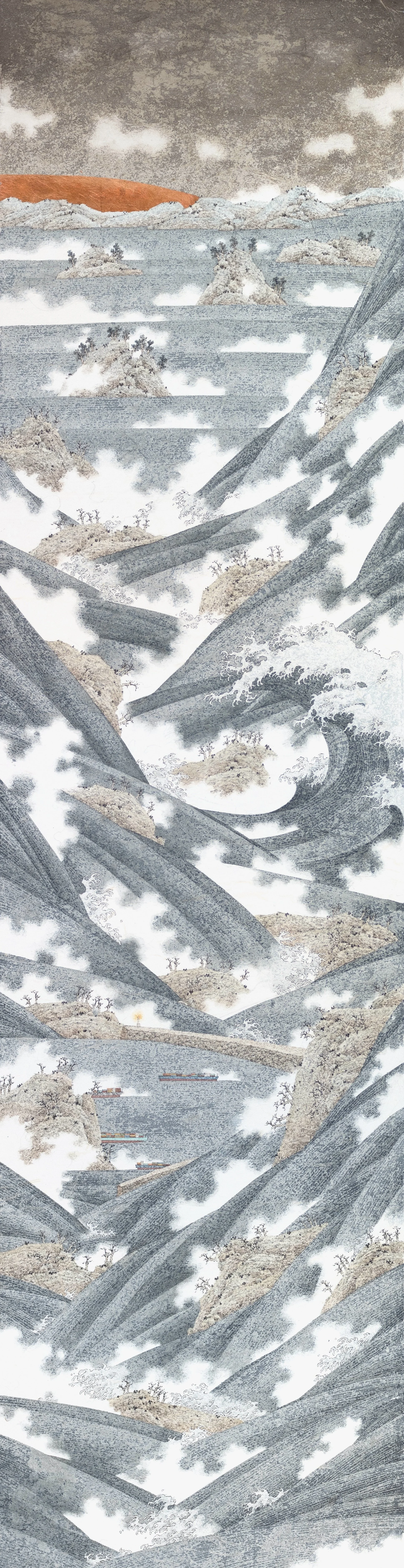
作品以直倒的畫面展開,海景傾覆,讓觀者仰視一場凝固的風暴。
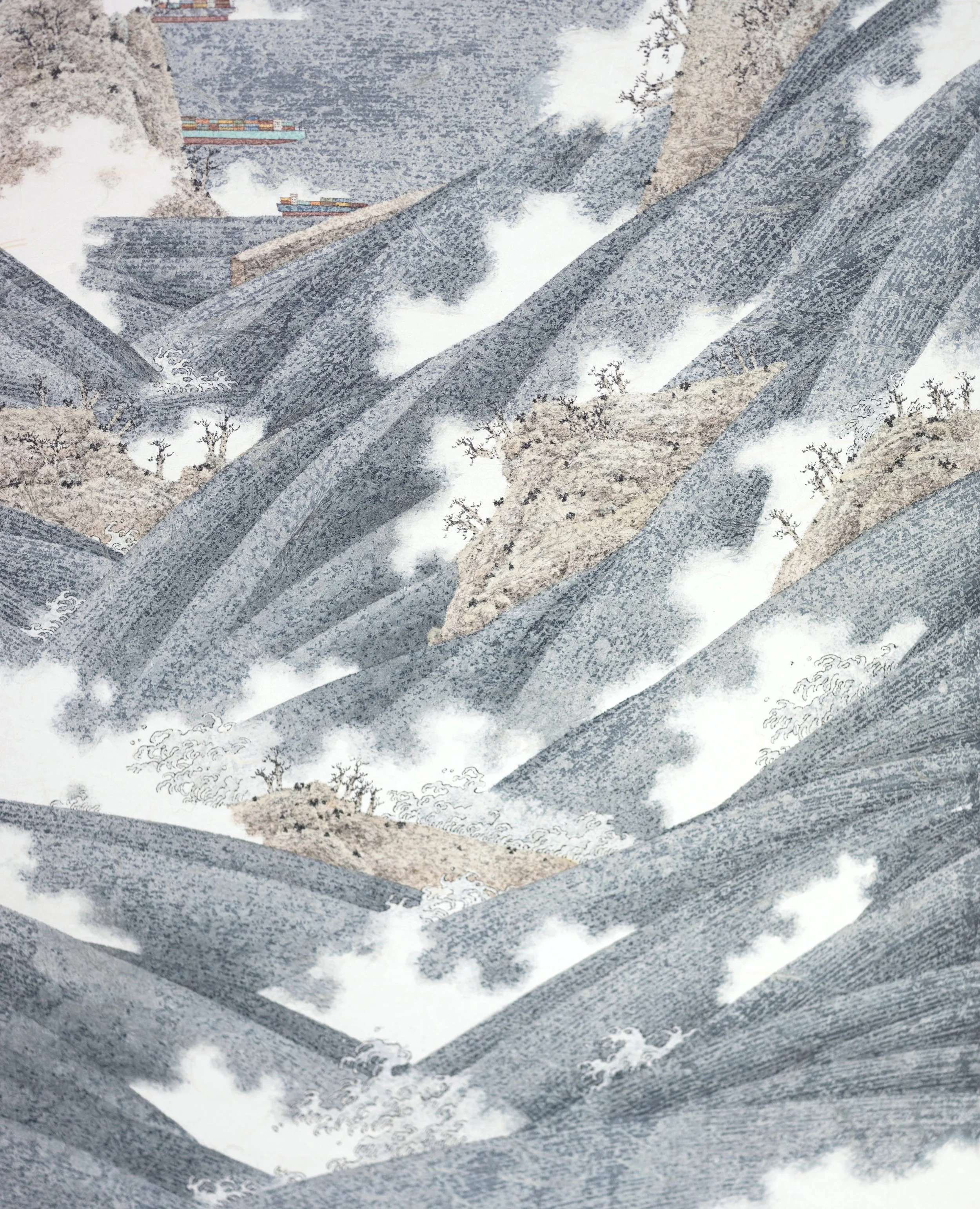
在畫面的中下部,多艘滿載貨物的貨船泊於避風港內,而遠方世界已徹底傾斜,海浪拍打島嶼令其偏斜,坡上樹木枯萎,象徵自然秩序被時代巨力扭曲,連最後的庇護之地也搖搖欲墜。貨船停滯於狹窄的避風港,映照出一種無力掙脫的命運。
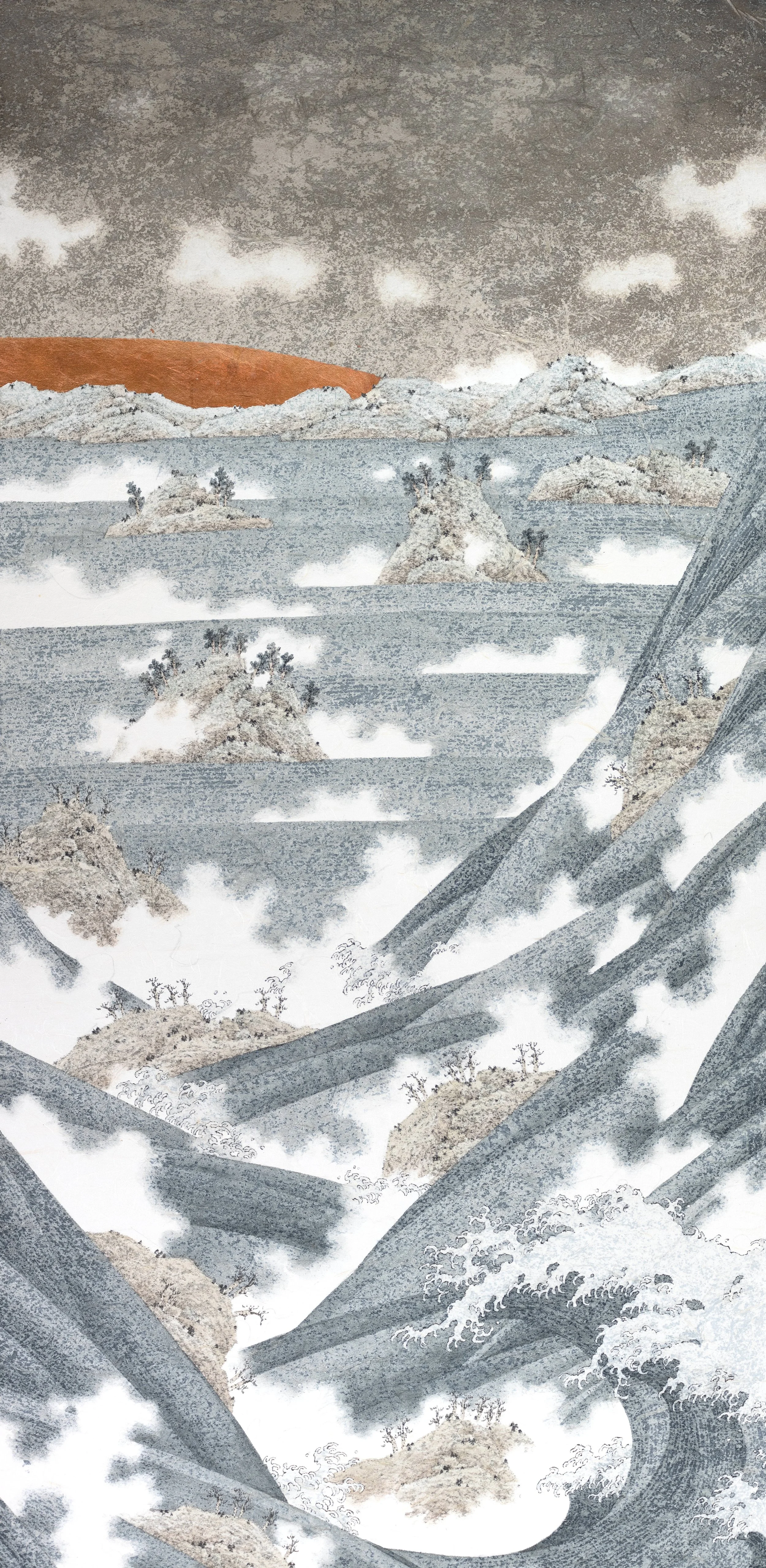
畫面上方保留一片未被波及的寧靜,銅箔貼製而成的太陽靜靜懸掛,散發微弱的金光。它並非刺目的烈陽,而是風暴前後、抑或風暴之中仍存的一抹期許,只要風平浪靜的時刻降臨,船隻即可掙脫停泊,續尋自身的歸途。
通過凝視「等待」,在徹底的無力之中,作品隱隱帶出前行的可能。
The work unfolds with a vertical composition: the seascape is overturned, forcing the viewer to look upward at a frozen storm.
In the middle-lower section, several cargo ships are moored in a typhoon shelter, while the distant world has tilted completely. Waves batter the islands out of alignment, and the trees on the slopes wither, symbolising how natural order has been warped by colossal forces of the era—even the last refuge appears on the verge of collapse. The ships remain stagnant in this narrow harbour, reflecting a fate from which there is no escape.
Above, a patch of untouched tranquillity is preserved: a sun crafted from hammered copper foil hangs quietly, emitting a faint, steadfast golden glow. It is not a blinding blaze, but a subtle promise that persists before, after, or even amid the storm—once calm returns, the ships may break free from their moorings and resume their journey home.
By gazing at “waiting,” the work quietly suggests, amid utter powerlessness, the faint possibility of moving forward.