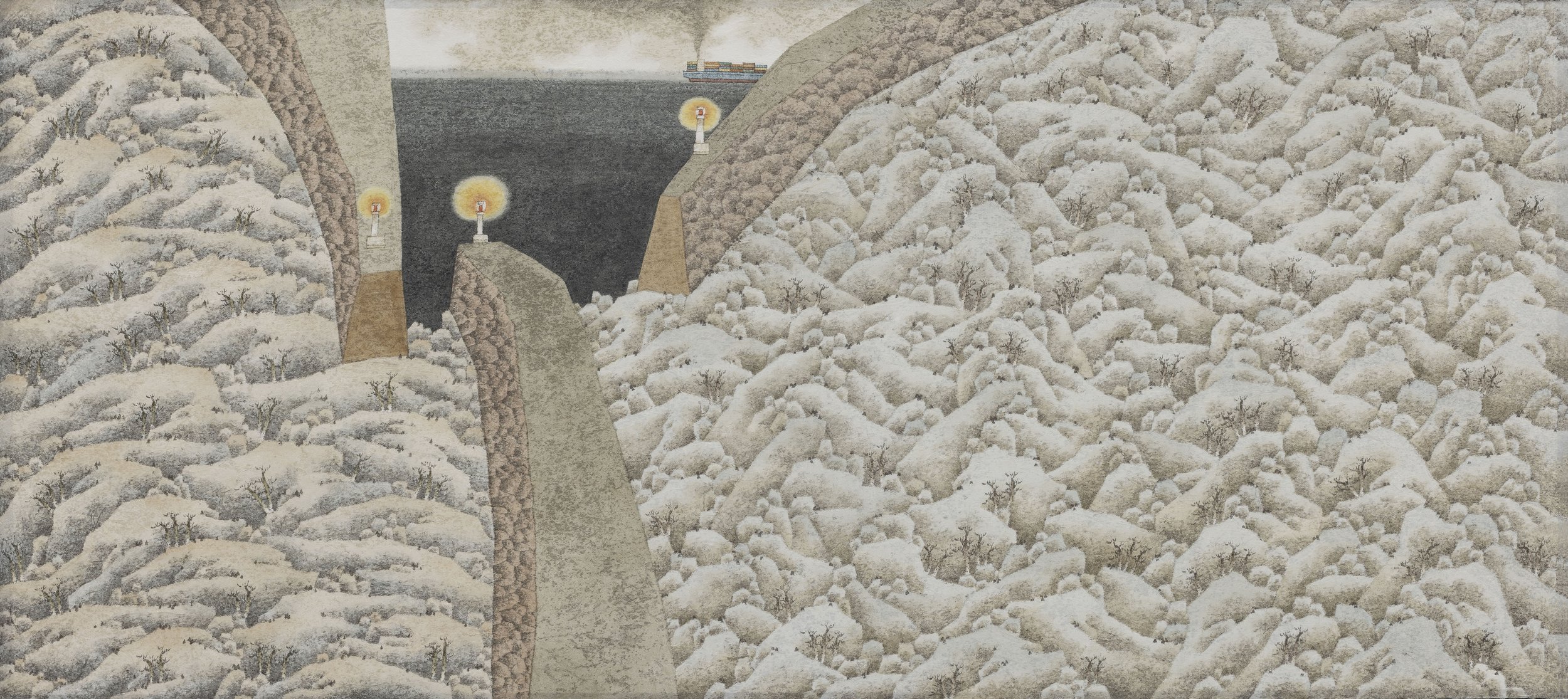
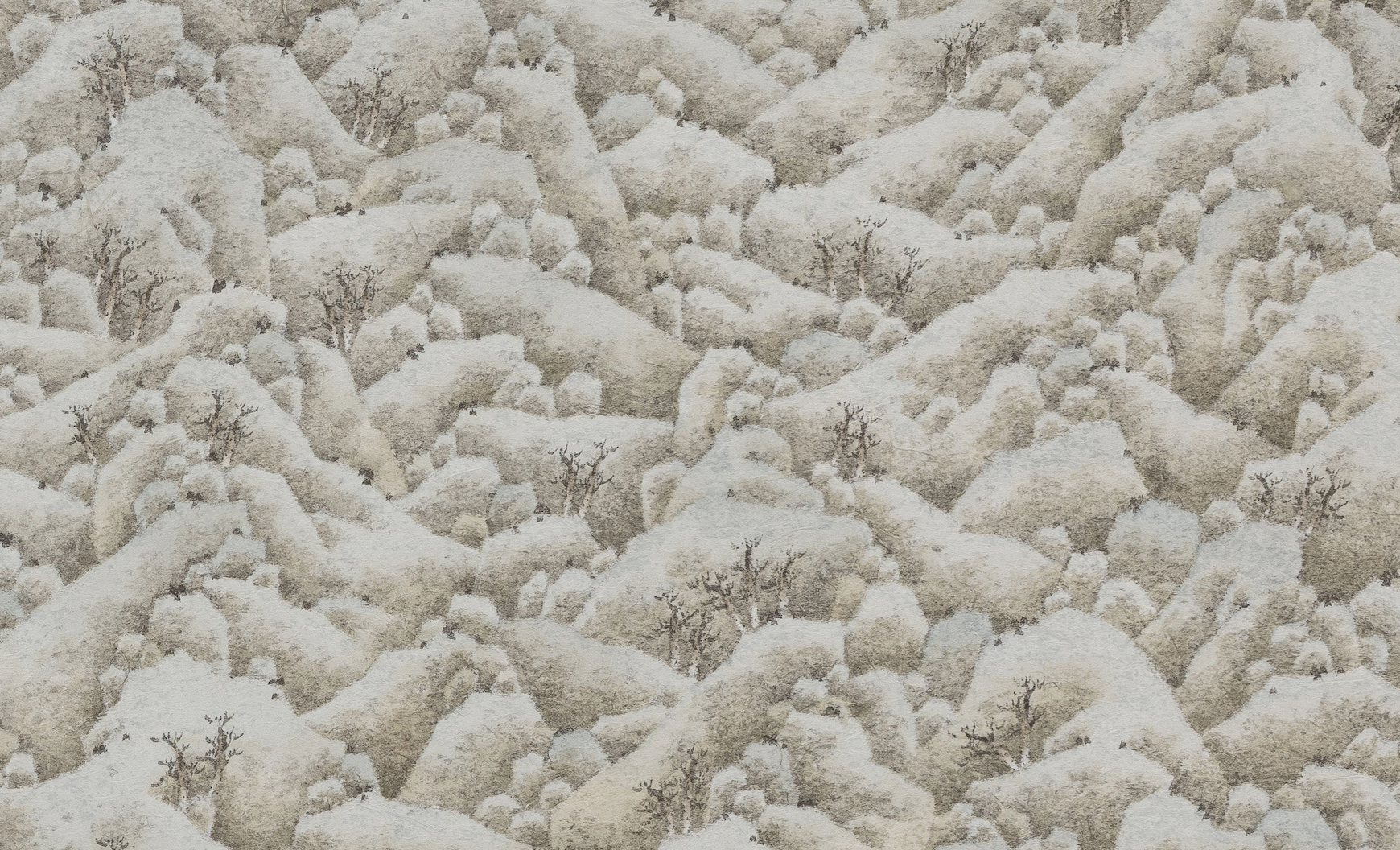
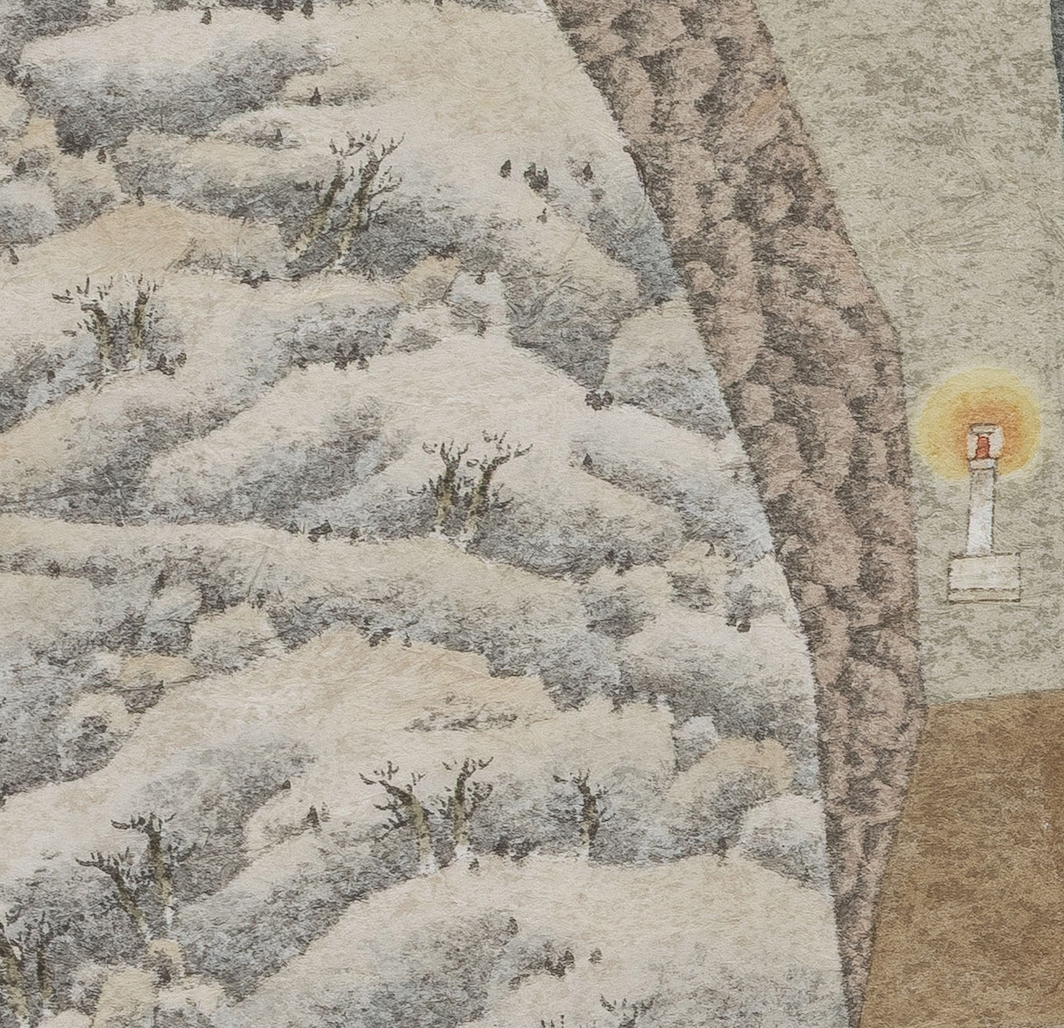
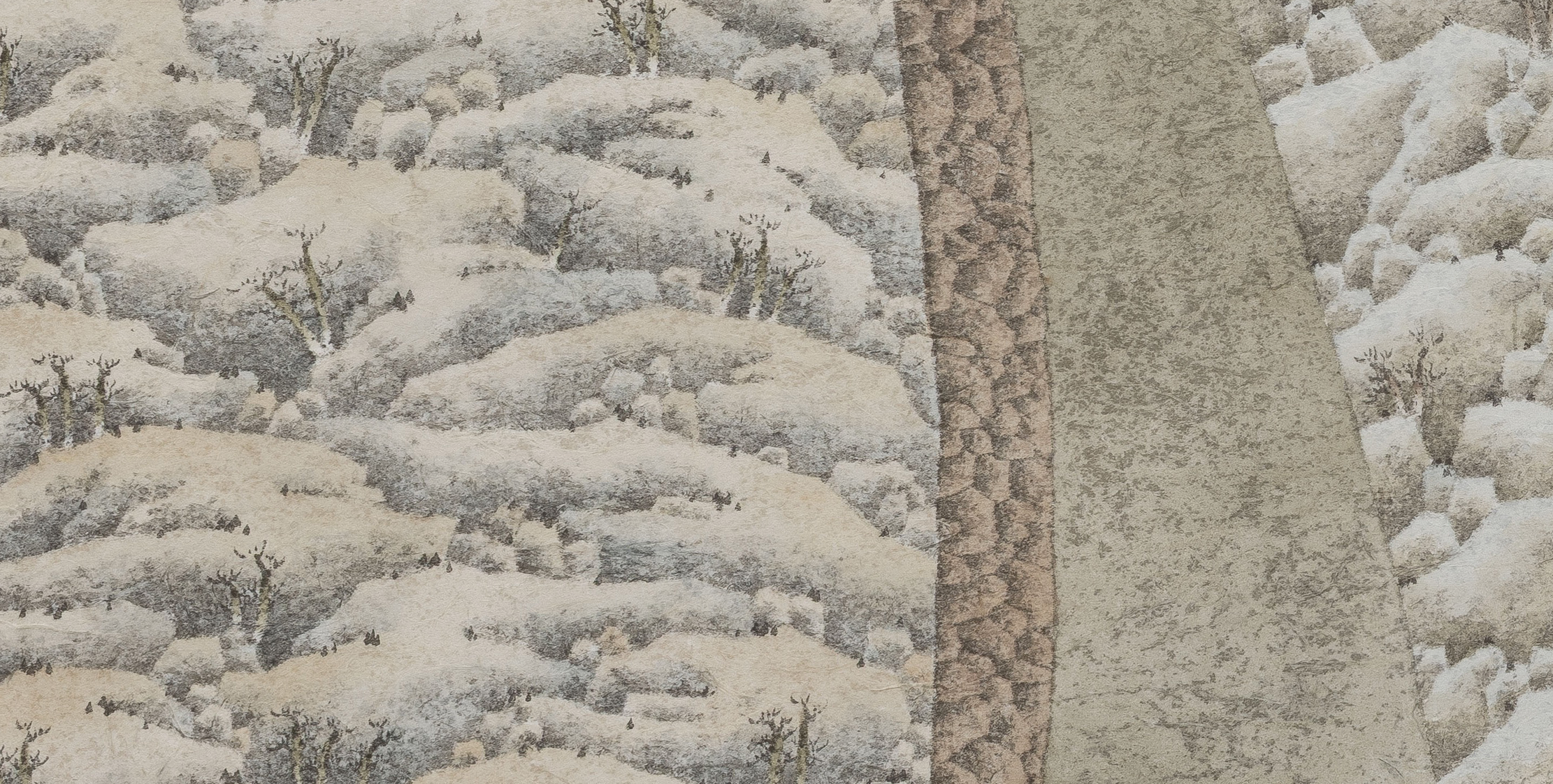
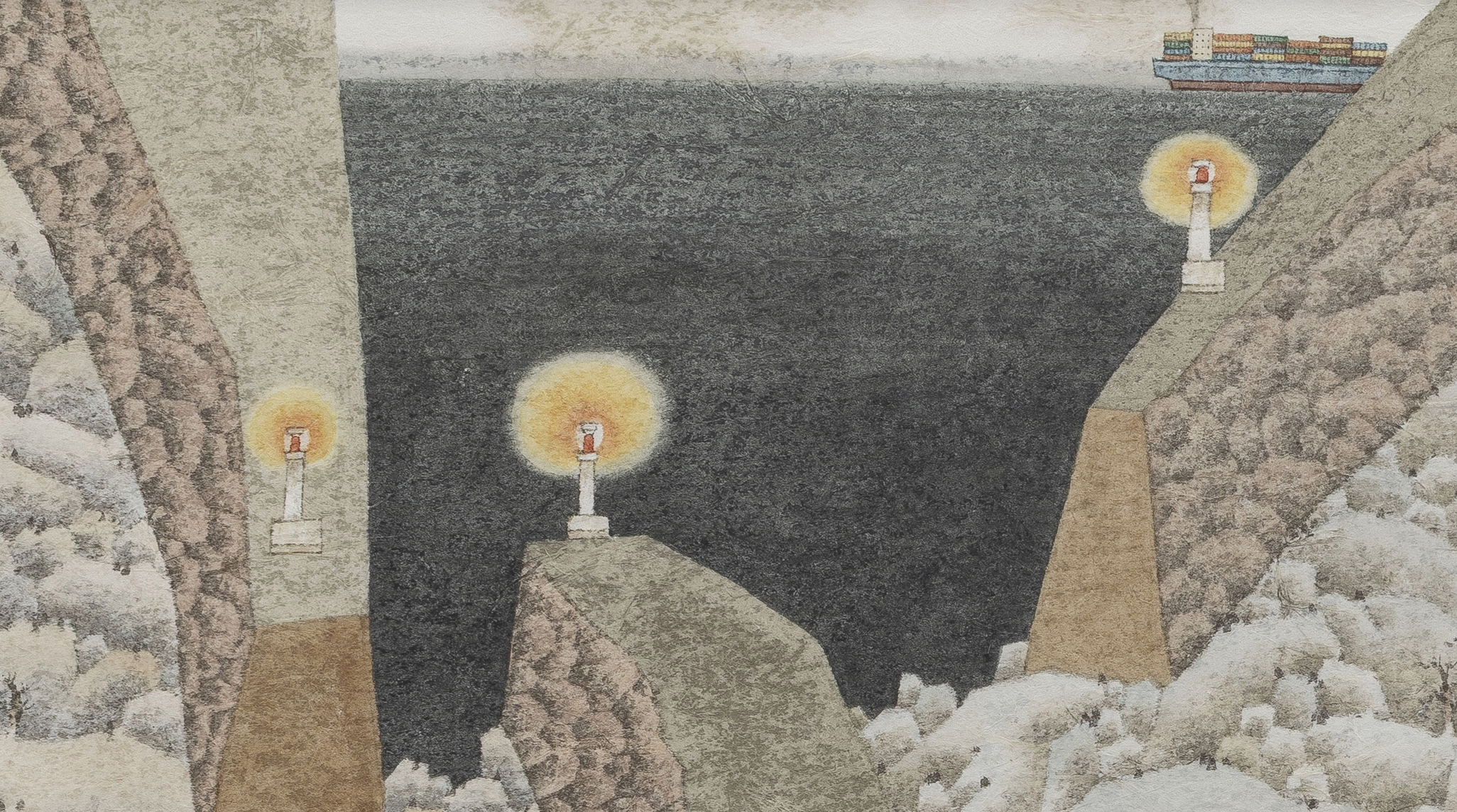
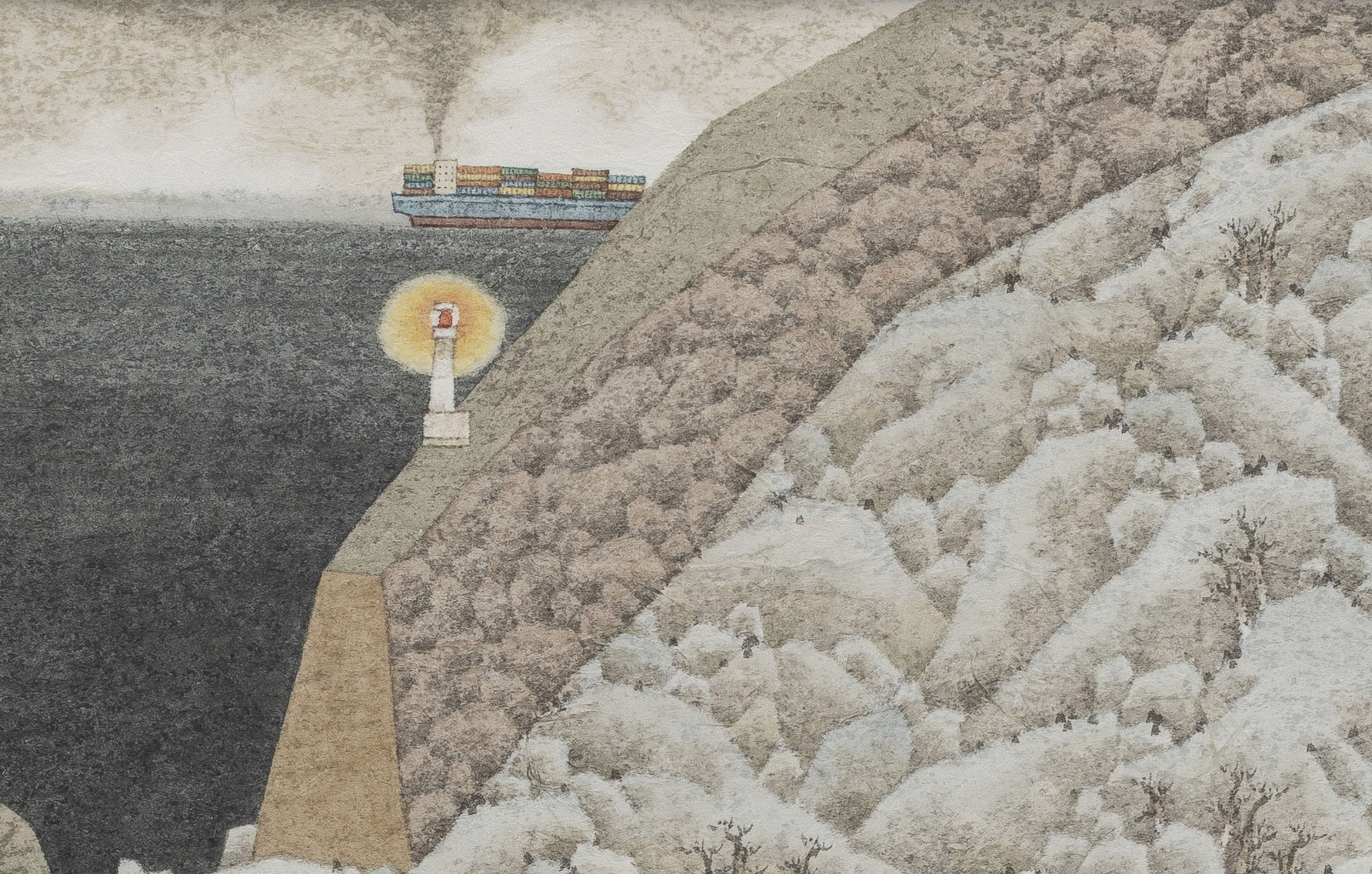
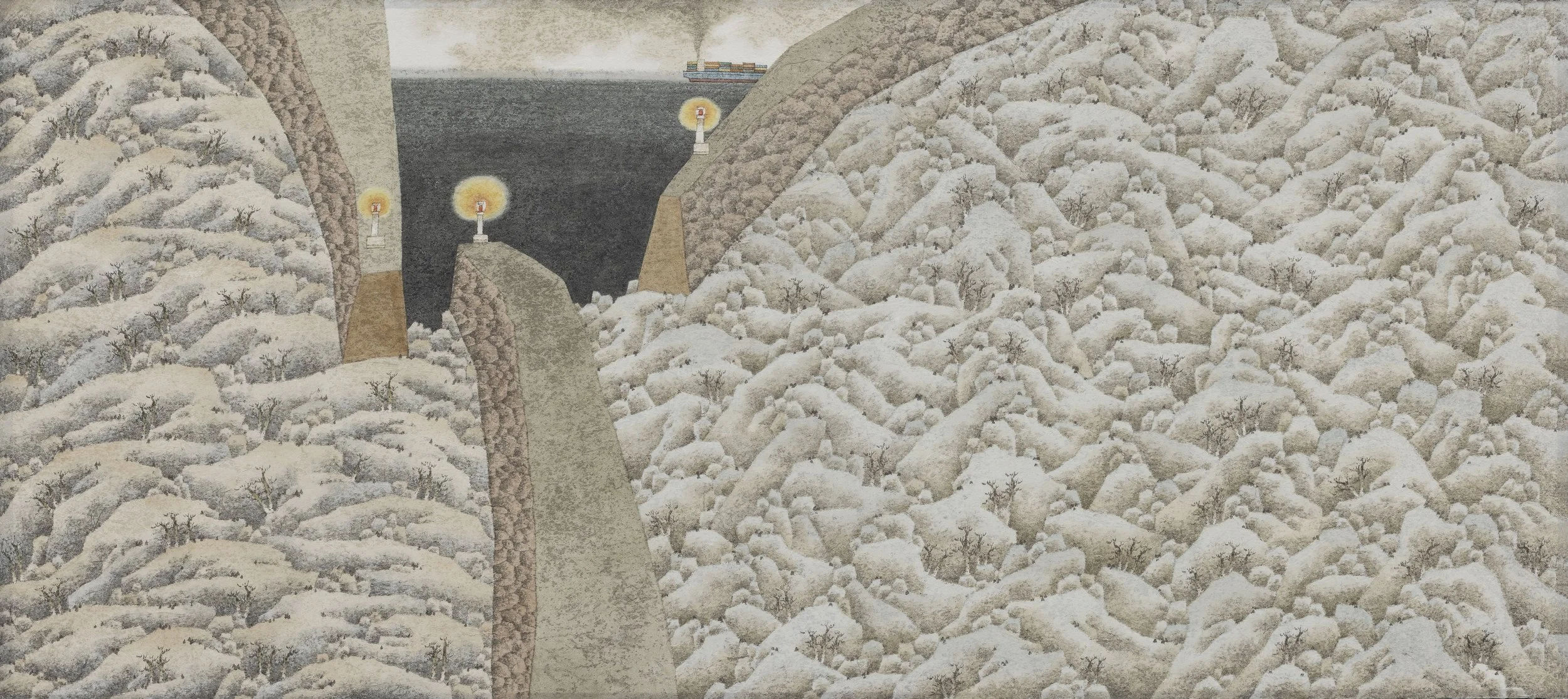
作品以多個奇怪構圖的避風港並置展開。防波堤的盡頭皆有燈塔微光閃爍,彷彿仍在履行指引的職責。然而,在荒謬的現實面前,這指引已淪為無力的儀式:避風港內無一滴海水、無一艘船隻,只剩密密麻麻、毫無生命力的山脊與枯萎樹木,顏色暗淡無光。這些曾經的庇護之地如今封塵已久,化為幽閉、無法再被使用的空殼——象徵安身之所的徹底消失,連最後的歸屬幻象也被無形的時間與遺忘吞噬。
避風港外,一艘孤獨的貨船仍在前行,即使被燈塔微光牽引,抵達終點時卻發現無門可入、無港可泊。這一動態與靜止的對比,不再是浪潮的吞噬,而是永恆的、無法進入的空虛。燈塔的光芒不再是希望,而是嘲諷——它引領的不是救贖,而是確認庇護已不復存在。
This painting unfolds with the juxtaposition of several strangely composed typhoon shelters. At the end of the breakwaters, there is the glimmer of lighthouses, seemingly still fulfilling their duty to guide. However, before an absurd reality, this guidance has become a powerless ritual: inside the shelters, there is not one drop of seawater or a single ship, only dense, lifeless mountain ridges and withered trees of dim colour. These once-places of shelter are now long-covered in dust, turned into claustrophobic and unusable empty shells—symbolising the complete disappearance of a place to settle, where even the last illusion of belonging is swallowed by invisible time and forgetfulness.
Outside the haven, a lonely cargo ship continues forward. Even though pulled by the lighthouse’s light, upon reaching the end, it finds no door to enter and no port to dock. This contrast between dynamic and static is no longer the engulfing of waves, but an eternal, inaccessible emptiness. The lighthouse light is no longer hope, but irony—it guides not to redemption, but to the confirmation that shelter no longer exists.